Friday, 26 March 2021

Ipswich in the Winter of 2020/2021

The picturesque waterfront, Ipswich


When it comes to good birdwatching sites, Ipswich doesn't really come to mind. Urban sprawl has taken its toll on the land, but amongst all the concrete some decent areas of wildlife habitat still remains. The main concentration is along the River Gipping, a large green vein flowing through a grey land, a haven for wildlife. Also of note is the Belstead Brook combination of nature reserves, a good area of rare habitats, always worth a view.

Because of the endless sprawl of concrete, and being cut off from the surrounding countryside, bird numbers aren't as high as rural areas, so there aren't as many to spot. As a result the natural places can be a bit more quiet than out in the countryside. But somehow small dots of wildlife habitats survive and provide some much needed homes for wildlife. 

The Winerack, Ipswich waterfront

A lot of the resident birds have become used to humans over the years and are quite tolerant of people, allowing you to get fairly close to them. For the record Christchurch Park has not been included, I have given a separate blog for that site. The rest of the birdy places are listed below.


RED-THROATED DIVER & SHAG on the Ipswich Waterfront

RED THROATED DIVER, Ipswich Waterfront

For a week in late October a RED THROATED DIVER spent its time on the River Orwell, around the expensive yachts that float around the town's waterfront. This was only my second record of this species in Ipswich, although its a common bird on the not too distant coast. Never very well the bird soon succumbed and was later found dead. There were a few birders twitching the bird, its very unusual to find any birdwatchers in Ipswich which was nice.


In the beginning of March a pair of SHAG were on the waterfront, smaller than cormorants, green-black, one also had a crest. Although nesting in large numbers on the cliffs up north, in Suffolk they are quite rare with only a few turning up each year. All my Suffolk records have been from this location, all at this period, which suggests birds migrating to their breeding grounds. Unfortunately as I was just passing through I had no bins or camera - typical.


Pipers Vale

Part of the Orwell country Park, the only country park around Ipswich, Pipers Vale is an area of scrubby grassland and secondary woodland along the River Orwell. The one draw is the fact that a path takes you under the mighty Orwell Bridge, a dramatic and picturesque construction. 

When I visited on the 30/12/2021 the tide was high and a large flock of REDSHANK were roosting on the beach, but were soon disturbed by dog walkers. The usual estuarine DUCKS were present with SHELDUCK, MALLARD and PINTAIL just off shore. Further out on the deeper water were several RED-BREASTED MERGANSER, a small flock of LITTLE GREBE with some GREAT CRESTED GREBES even further out still.

I did a second visit on 12/3 when again it was high tide. The end of winter, and the period I'm blogging, there were a few remnant ducks of the winter season with a couple of WIGEON and PINTAIL, close to shore. Further out there were three RED BREASTED MERGANSERS, three LITTL GREBE and a GREAT CRESTED GREBE in the distance, all typical winter birds of the estuary. These birds will move on over the couple of weeks with only a small number of birds nesting along the Orwell. Pipers Vale is pretty much the best area within the boundaries of Ipswich in which to see estuarine birds, with views beyond the man made docks.


Chantry Park

The largest park in Ipswich, Chantry Park is also its most rural, being situated on the south-western edge of the town. Being a municipal park there are huge areas of of open grass, loved by dog walkers with some landscaped gardens round the stately home in the centre. These all have good examples of old trees, including some dramatic cedars around the gardens. However despite all these man-made trimmings its easy to get away from the people who use it. There is plenty of decent habitats for birds around the edges of the park, with lots of scrubby, wooded areas also with some rough grassland. These all attract lots of species and being largely parkland it has plenty of MISTLE THRUSH and GREEN WOODPECKERS.

The pond, Chantry Park

On one visit on 27/11 the land was covered in a thick layer of fog which provided atmospheric photos. I saw a marauding SPARROWHAWK and as usual for this winter, so far, lots of REDWING. 


Sir Bobby Robson's Bridge

A pair of SWANS have nested in the same spot for nine years

This is a nice spot near to the centre of town, just a stone's throw from the council buildings. A footbridge crosses the river where the Orwell and Gipping meet, the last place where the river becomes tidal. It was concreted in the 60s, along the river's sides and at low tide lots of shopping trolleys and road cones are revealed. Bird-wise, this is a good spot for REDSHANK and LITTLE EGRET, and OYSTERCATCHER nest on the surrounding warehouse roofs in summer. 


Sir Bobby Robson Bridge

By the time I made a further visit on 16/3/2021, birds were creating breeding territories on the river. A pair of MUTE SWANS have nested on the river bank by the bridge for at least the past nine years and were present again this year. Also present were a pair of CANADA GEESE and some MALLARDS.


Belstead Brook

This is the wildlife area in Ipswich, a chain of nature reserves that form a green underbelly to the town. Following the Belstead river, this informal country park consists of ancient woodland, wet grassland, reedbed, wet woodland, as well as parkland. It attracts a large variety of nature, famous for its bluebell displays in Spring Wood.


Coppicing in Spring Wood

I visited on 27/1, walking round Spring Wood, an ancient forest that has stood for as long as records begin; also Bobbit's Lane meadows, rough grassland that has flooded areas that transforms to reeds and bulrushes; and Ashground Plantation an area of seasonally flooded woodland. 

In Spring Wood there was coppicing in commencement, a practice which opens up the woodland canopy for its amazing display of BLUEBELLS in Spring. Lots of the commoner birds were out in force twinkling away in the background to my walk. The first singing SONG THRUSH of the year was heard and some REDWINGS were on the edge of the wood, signs of Spring and Winter together.


Boardwalk through Ashground Plantation

In the bulrushes on Bobbit's Lane Meadow, a CETTI'S WARBLER was in song, they have colonised every nook and cranny of Suffolk. Ashground Plantation was flooded the  brook had burst its bank, and with water standing under the canopy of the trees walking was limited. A SPARROWHAWK marauded along the trees, whilst in the neihbouring sewage farm a GREY WAGTAIL was present.

Whilst out here I met a fellow birdwatcher who was collecting all the masses of rubbish dumped in the area and he gave me a heads up to a bird in another part of town...


HOODED MERGANSER on the River Gipping

I was actually told a BUFFLEHEAD was present, along the river Gipping. An American form of  goldeneye, I was desperate to see a bird I've never spotted before, especially in Ipswich. However it turned out to be the HOODED MERGANSER, a bird that has been hanging around Ipswich for at least eighteen months. Its fine as I haven't seen the bird for a while, so it wasn't too much of a disappointment. The bird, like all male ducks, was very colourful, standing out amongst all the commoner birds, such as MOORHENS and GULLS. Most distinctive was its "hood" a massive tear drop of white creating a long tuft to  the back of its head, giving the bird its name.


HOODED MERGANSER, river Gipping

The bird was present by Tanner's View, a very urban part of the river with housing developments on one side and warehouses on the other. The hooded merganser spent its time on the opposite bank of the river, the one where there is no human access where it stayed amongst the MALLARDS and COOT. 


The river Gipping from Tanner's View

The river Gipping is a green vein that flows through the town of Ipswich, with its reed fringes and trees providing lots of habitat for nature. Like a lot of the course of the Gipping, trees have been planted along the river, a good deed as this prevents erosion of the river bank and slows down flooding. 


Pair CANADA GEESE, river Gipping

On a visit on 16/3 a pair of MUTE SWAN and CANADA GEESE were all present on the river, hoping to breed. Further down the river, past the first viaduct and close to the fringes of the town were a pair of KINGFISHERS, calling out with their dunnock-sounding call. I hope they are a breeding pair, the area they were in had plenty of riverside trees, their favourite nesting habitat. Kingfishers are one of those jewels of birds, not common, not rare, but always worth a note, and are beautiful to see, maybe our most colourful native bird.


OK, so I can't pretend that Ipswich is good for birds, as it really isn't. Even though I spend much time in the area, its where I live, I just don't see the birds I do out in the countryside. However from time to time the odd bird turns up that makes the place interesting. In lockdown, with all the main reserves closed or too far away, winter has not been that great for birdwatching, and as a result there has been a emphasis on local sites. This has made birdwatching in Ipswich that more important than in normal times. Anyway, whilst I still live in this town, I will continue to birdwatch here, so maybe there will be a sighting to reward my patience. Or, most likely, not.

Wednesday, 10 March 2021

Winter on the Local Patch - 2020/21


Female BLACKBIRD

As a new season comes around, so another blog must be written about the Local Patch. An arable land, mixed with hedges and horse paddocks it attracts a small amount of birds, species of the open countryside, as well as the common birds seen in most places. For me it is the place that gives me access to nature, as I ramble the many footpaths that crisscross the land, bins and camera to hand. This blog entry gives a record of the more interesting sightings over the period, rather than a day to day record, which would be a bit tedious and which blights a lot of writing about birds


                A male KESTREL is resident on the Patch, although he never seems to attract a mate

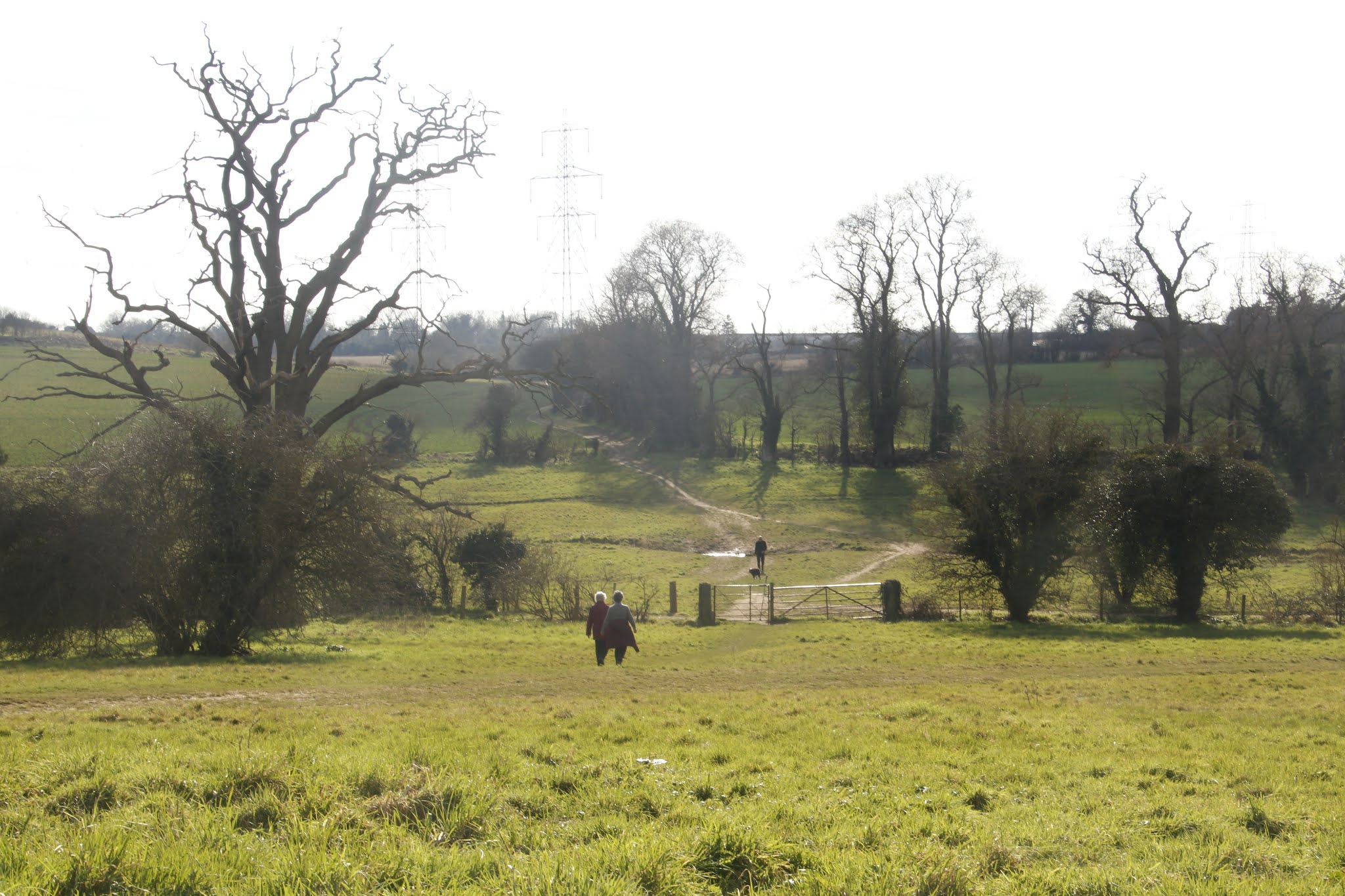
 As is usual for this time of year, winter was grey and miserable on the Patch. Lots of rain, heavy frosts and overcast days set for some dreary walks. And then on 7 February heavy snow fell and the world became white. The snow hung heavy on the Patch, although not too deep, maybe six inches or thereabouts. As the snow lay there there were some beautiful days with some great light enlivening the environment. The Patch is well walked and therefore the paths never became impassable. The pond and the reservoir froze over, although the stream still flowed. After a while, however, the novelty of the snow soon wore off  and the snow became dirty, and the paths slippery, as it slowly melted. The snows lasted around a week before being washed away by the rain. The rest of the period was very mild and sunny preparing the ground for Spring.


The Patch was hit by snow mid February

The star bird of the period was a RED KITE flying over Rise Hall, harassed by the local CROWS. It is so unmistakable when compared to the other local bird of prey, the buzzard, the kite has a forked tail, its pushed back, pointed wings and its orange colouring. From just a few pairs in Wales, the red kite has now spread to  every corner of the land. This is a first record for the Patch, and with increasing records in Suffolk, maybe one to colonise in the future.


A large flock of REDWING on the Suffolk Punch Field

A female STONECHAT was a decent sighting on 24/2 in the former horse pastures behind First Field. A typical early migrant, it begins moving when other birds still feel it is winter. This is only my second record for the Patch, the other record also occurring at this time. Stonechat populations are at a historical high due to the excellent management of Suffolk's heaths, which are their breeding grounds, and should become more common in the future.


One of the many horses on the Patch

Winter brought in new birds to the Patch. This season, specifically November and December, brought in the biggest movement of REDWINGS I have seen in years. Located mainly around the Suffolk Punch Field there were maybe over a hundred present at a time. They were often very wary, and would seldom settle, flying into the trees and scattered bushes, before flying up again at the slightest provocation. Mid-winter there was a lull with only a few records as they left the Patch. However towards the end of February the birds returned, maybe as Spring migrants. A flock of 70 on 17/2 were found amongst the horse paddocks, an interesting record.


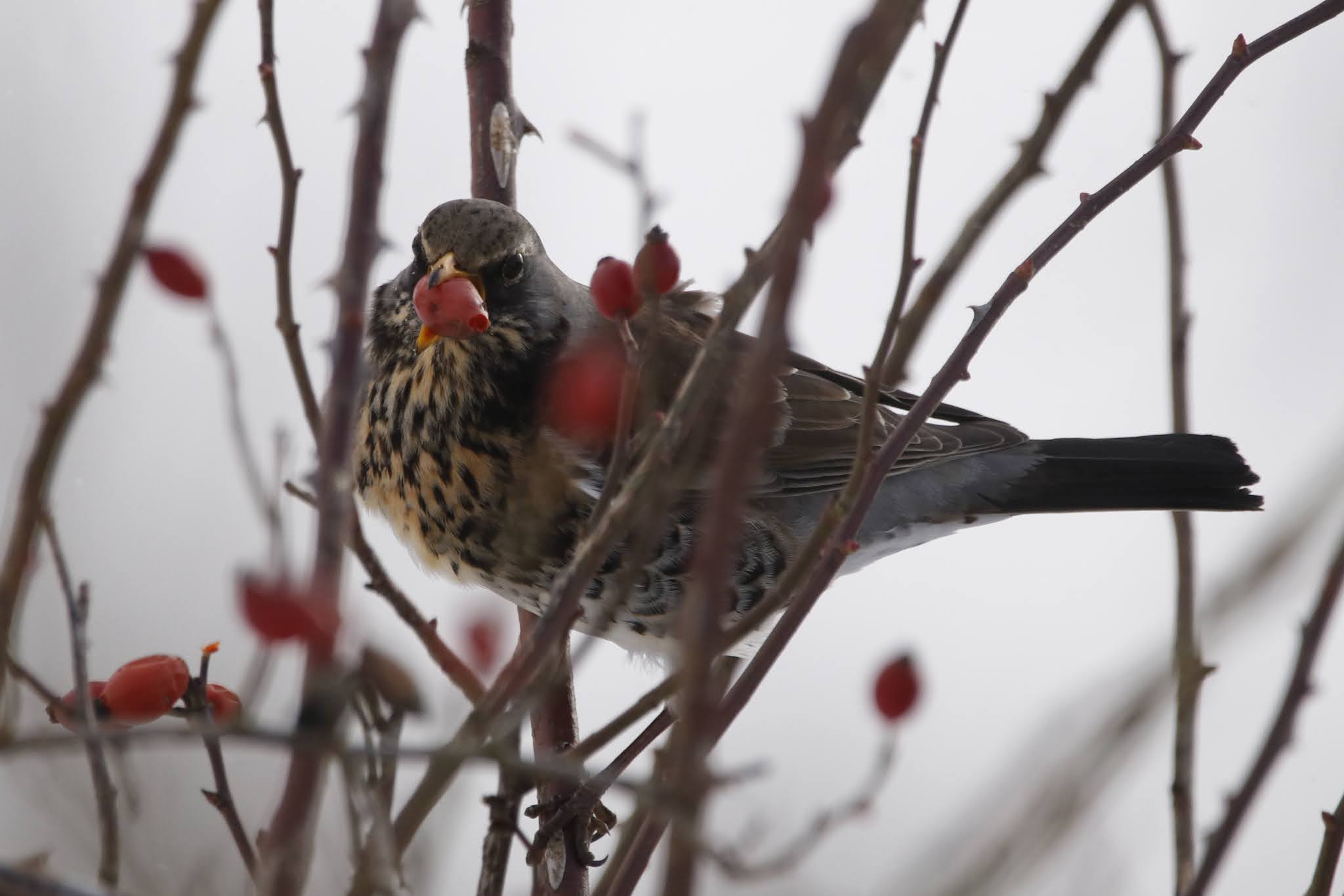
Only a few FIELDFARE were found this winter

BLACKBIRDS were also very common this winter, and were perhaps the most noticeable bird on the Patch, with many a bird feeding by a hedgerow or flying low. Despite all this, however, FIELDFARE, the other winter thrush, were only present in ones or twos.


A nice record was a pair of BULLFINCHES by the Pond, on 1/1, birds that don't flock but live in pairs for life, their melancholy call and white rumps are a good way of identifying the birds. This species goes through peaks and troughs and at the moment is quite scarce on the Patch.

Someone has put up feeders along the northern part of Old Norwich Road, toward the edge of the Patch, and among the commoner birds scoffing away there were a pair of COAL TITS, rare birds on the Patch, feeding under the drone of the A14.


BLUE TIT

Both GREEN and GREAT SPOTTED WOODPECKER are resident on the Patch, and I see them most days. Early February there were three great spotted woodpeckers in the tall trees around Rise Hall. A bird is on territory here most years, and he seemed to be chasing some interlopers away. It won't be long before it starts to drum, to announce his availability to the females. Green woods are harder to pin down as they are often seen whenever there are trees, and their "yaffelling" call can be heard around the Patch.


A small flock of 30-40 HOUSE SPARROWS is resident on Old Norwich Road. They fly off to feed on the hedges on First Field

The BUZZARDS were as usual present all year, whilst a male KESTREL was also present, although he never seems to attract a mate. However the little owl I saw last year hasn't been located for some time, so may have moved on, which is a shame.


Looking from Suffolk Punch Field over to River Meadow

Waterbirds are always scarce on the Patch as there is only a little stream, a reservoir, and a little pond. MALLARDS peaked at twelve, and six CANADA GEESE at the end of January was unusual.

An unusual record of a common bird was a flock of 30 MAGPIES in the First Field. A relatively unsociable bird, they are usually only seen in ones or twos, a group of magpies is called a PARLIAMENT.


ROBIN

In winter birds are the species I see most on the Patch, however aside from my feathered friends there were some other forms of life. A few mammals were about. A RED FOX was present in the meadow behind the sports centre, on 29/12, slinking by one of the hedgerows. I have seen foxes in many cities, including in central London, but for some reason they are scarce in Ipswich, and this is my only second record for the area. Another scarce record was a MUTJAC on 8/1. With little wooded cover, this alien deer is quite rare on the Patch.


SNOWDROPS under the trees, Rise Hall

As the new year begins, and with a few months under the belt, signs of spring flowers start to appear. SNOWDROPS have begun to grow, in the area of scrub at the beginning of the Patch, at Rise Hall, and around the church. Also appearing under the trees at Rise Hall, yellow LESSER CELENDINE are also flowering another nice, early flower.


The tall trees around Rise Hall are good for WOODPECKERS

Even those areas of countryside that have nothing in particular to distinguish themselves can be good for birds. Nature can't sit in nature reserves, prisons with no way out for them. It is up to the general countryside to provide room for our wildlife to survive and to provide room for movement. Protecting hedgerows, and those corners of  fields where the flowers grow are paramount for giving wildlife a home. Maybe post brexit, British farming policy will change for the better for wildlife, it can't get any worse. Maybe in the future we will live in a  society that sees value in nature, as something to cherish, and not destroy.

Friday, 5 March 2021

Papermill Reedbed - Winter 2021

GREY WAGTAIL

On some stretches of the river Gipping there are some nice examples of water meadows, old time remnants of a former landscape that once stretched the whole river. Now they are rare, as being close to Ipswich means the Gipping is surrounded by an industrialised landscape, with land put under pressure for development. The area is a man made wilderness of warehouses, train lines, busy roads and housing estates. That makes this small area of countryside extra important for being the last of its kind.

Around 50 trees have been planted along this stretch of the river

I started to visit the area more intensely after a third lockdown was enforced. I decided to concentrate on an underwatched area, somewhere off the beaten track, where little birding has been done, a blank slate so to speak. Its only a short hop away from me, on the border of Ipswich, but yet manages to be people-free, lying as it does between residential areas. This is important to me as I work in a very busy and congested environment, so I really can get away from it all and unwind both physically and psychologically, for which I find birding so important. I visited the area four times in this period and hope to visit a couple of times a month for the rest of the year, unless other things get in the way.

A pair of MUTE SWANS have turned up on the river

The small reedbed, the one used in the title, used to be a Suffolk Wildlife Trust reserve, however the reserve has been taken off the website and the info sign has been taken down, so it is designated no longer. The area I visit follows the river Gipping up and down, starting behind a disused factory all the way up to a junction of the A14. The river here is broad and gently meanders. There is the small reedbed that gives the area its name, which is becoming overgrown now. The rest of the area is seasonally flooded pasture grazed by cattle in the summer. A new feature are some trees that have been planted along the entire Gipping, with over fifty in this area alone. This planting was undertaken by the Suffolk Wildlife Trust and the Environment Agency and is a nice feature of the area, as there aren't many trees around here.

WHITE-FRONT, in front, look how tiny it looks next to a GREYLAG

By far the most interesting bird I saw in this period was a EURASIAN WHITE-FRONTED GOOSE. The bird was among a small flock of GREYLAGS on a flooded area to the north of the site. To begin with it was lying down in a depression so I could only see the top of its head on occasion as it would move about. Being too far away for a photo, I moved in closer, causing the flock to move and eventually the bird came into view. After that I was able to photograph the bird and the flock got used to me. This winter has seen an influx of white fronts with a lot of birds turning up in places where they have never been recorded before, including some I saw further up the river Gipping in December. This is very unusual behaviour for a bird that is usually site loyal on its wintering grounds. The bird at Papermill is an excellent record for the area, who knows if it has ever been recorded around here before.


Who know if there have ever been another record of white-fronts in this area

Other than that, birdwise the area is fairly quiet, I don't usually see that much on each visit, but as a slice of English countryside its fairly representative. It attracts small numbers of wetland birds and those of the general countryside. Whenever I visit I see a GREY WAGTAIL by the mill, now a block of apartments, with a maximum of three 5/3. There were several singing CETTI'S WARBLERS, a bird which has pretty much colonised every corner of Suffolk. A REED BUNTING sang from the reedbeds, all common birds, but birds that have been sidelined in our countryside.

The river Gipping had completely broken its banks, flooding the meadows on the 29/1

With a winter full of rain and flooding, a visit on the 29/1 saw the site completely flooded. The Gipping had burst its banks, covering the meadows entirely in flood water. The only place free was the tiny parking spot, on a slight rise over the rest of the area. On that day there was a singing MISTLE THRUSH, its haunting call ringing out over the water. A week later I heard a SONG THRUSH, its elaborate song calling out in the gentle air of the countryside. On 5/3 a large flock of 70 REDWINGS were in the tree plantation across the river, a sign of birds on the move, its been a good winter for those birds.

See, interesting birds can turn up anywhere

On one visit, 5/2, I  had a tiny flock of three SISKIN in some riverside alders, not large numbers but a new species for the site, with few trees little birds are quite scarce. Whilst walking up the river I disturbed and put to flight a TEAL from the reedbeds. On the same day a sign of spring was in the air with the arrival of a pair of MUTE SWANS on the same area of flooding as the geese. These birds might be potential nesters and birds which might maybe stay the summer on the river. They were seen again on a later date, this part of the river being quieter it would be a good area for them to nest in. 

LITTLE EGRET on the Gipping

A snapshot of an area of countryside, not particularly special in any way but still fairly interesting. This is an area I don't know well, so I wonder what I'll see over the course of a year, so in some ways its quite exciting (yes I know I'm quite sad). In some ways its important to monitor these areas as being on the edge of Ipswich land is a high value commodity, nature a low one where money is concerned. As a result this will be record of somewhere that may not exist in the future, a museum piece of a land that was lost for wildlife.


Thursday, 14 January 2021

A year on Byron Road Part 2 - June - December


Gardens are our window onto nature, most of the time quite literally. Often dismissed as a place for just common birds, a place to overlook, we sometimes take them for granted. But gardens are our own private spaces ones we have full control of, compared to other places in the country. Gardens are the unsung champions of the bird world, all of them put together equal more in size than all the nature reserves in the country. Byron Road is a small slice of urban countryside, a completely normal place bird wise, yet a place that comes up with lots of surprises.

As with everywhere else in the world the seasons come and go on Byron Road, and the wildlife waxes and wanes with them. A non-descript street in the Whitton estate, Byron Road is the area I call home, a street that lies on the outskirts of Ipswich, a fairly non-descript town. Built of fairly anonymous housing, most of the buildings open up onto the road, concrete driveways offering little greenery, the main exception being a large tree directly outside my house. Its around the rear where the area shines as relatively large back gardens form one large slice of greenery.

Fledged BLACKBIRD. These black thrushes nest in the thick conifer hedge in my garden

As a shared area my garden is a bit bigger than most. Being suburban Ipswich the number of birds is smaller than a corresponding area of countryside. However that doesn't stop the birds coming and going. The most unusual sighting for the period was of three RING NECKED PARAKEETS, on the 24/11, an unusual bird for Ipswich. I was in the back garden when I heard their exotic call, familiar from my time in London, and running round to the front saw them in the large tree out there. Although common round London, the population in Ipswich numbers just four, so I was home to three quarters of the population. The four Ipswich birds usually spend their time round the cemeteries but can be quite  mobile. There is now talk of culling the UK population, a population that numbers over twenty thousand, so that's a lot of birds that are going to die. 

RED ADMRIAL. Only small numbers of a couple of species live in the garden.

As June comes round most of the birds have fledged young and the birds either leave or settle down for a second or third brood. The STARLINGS usually raise one brood before forming large post breeding flocks in late summer. However its not long before they leave, where they go I have no idea, but its away from Byron Road. They return around late September with numbers building up until they reach several hundred with birds lining the chimney pots on the street, and I often see lots of them perched on a tree in my garden. Their whistle calls are drowned out by the sound of cars going passed, and I often dream of seeing a rose coloured starling amongst them, I'm sure one day I will.

HOUSE SPARROWS bickering over their place on the feeders

I don't feed the birds during Summer, there's plenty of natural food available for them, but come Autumn I start to put food out again. The main birds who really take advantage of this free food are the HOUSE SPARROWS. With a flock of around thirty living within an area of a couple of houses, including my own. The birds fly into the nearby conifer hedge, perch there waiting their turn while one or two feast on the feeders. They are quite sensitive to change, and if I change the brand of bird seed I put out, it may take them several days to pick up the nerve to feed again. Occasionally a GREAT SPOTTED WOODPECKER would visit to peck at the peanuts and the TITS are also quite partial to them as well.

The young crow in the garden

A pair of CARRION CROWS are resident in the area, nesting each year in a different location. This year (2020) a pair nested in the neighbouring, tall, eucalyptus tree. The pair raised two young this year, which is pretty normal. However one of them had a bit of trouble. The poor crow hung around the garden for several weeks, and didn't seem to be able to fly, except for a kind of pheasant type flight up to the top of a fence post. For that time it was a real character in the garden, constantly calling out to its parents to feed it with the most raucous cry. After a fortnight it had disappeared, whether it had learned to fly or had been caught by a cat, who knows, but it was most missed.

Two HOUSE SPARROWS waiting for their go on the feeders

In the beginning of July a large passage of SWIFTS was seen over the garden with more than 40 present screeching in the skies over Byron Road. This coincided with movements all over the country, when large flocks were seen at migration watchpoints. The number of swifts that live over Whitton is quite small, so it was nice to see this migration. One of our first birds to leave, the swifts vacate the skies above come early August.


My three allotment beds

Having a relatively boring garden, a lot of grass, I decided to do something with it. I wanted to do two things, create space for wildlife and grow my own food. I first started a allotment in 2017, with one raised bed, until I added another two over the years, to create three areas to grow vegetables. I also added tomatoes, in grow bags and raspberries bushes planted into the ground. I have a rotation of potatoes, carrots and parsnips, and broad beans in the three veg beds. In late August, I planted some cabbages, with the aim of harvesting them a couple of months later. These cabbages then became infested with LARGE WHITE CATERPILLARS, large insects that totally decimated the cabbages, hence their alternative name of cabbage white. In late July a second emergence of HOLLY BLUES occurred although less number than earlier in the year. The large overgrown clumps of ivy in the garden create a great place for these lovely little insects to live out their lives. On 15 September a huge HORNET was present in the garden which was a real surprise as it perched on one of my raspberry bushes.

LARGE WHITE CATERPILLARS eating my cabbages

In my garden I have grown a wildflower meadow, by creating an area of bare ground and sowing with meadow flower seeds. Started in 2017, it has taken a while to get established, but has come into its own in 2020. In June the area became overgrown with OXEYE DAISIES, with many flowers present, which were replaced by WILD CARROT a month later, a kind of cow parsley type flower.

OXEYE DAISIES growing in my wildflower garden

2019 I created a scarecrow from mainly local sources, except for the gas mask which I got online. The ground in my garden however, has only a shallow top soil which grows over a hard sub surface. This  meant I couldn't dig him into the ground, only put him in a large pot, which kept getting blown over every time we had a storm. In 2020 I remade him, same clothes, different gas mask (I like gas masks), dug the pot as far into the ground as possible and created support from bamboo canes which worked and he styed upright, until after a heavy storm, the timber he was attached to snapped. Every year it seems I need to make a new scarecrow. Aside from that I wanted to create a pond for the garden. I really wanted a bath tub for this as I thought it would look cool. I managed, through a friend of a neighbour, to get hold of one for free although at the moment it still stands empty as I prepare to plant in the Spring.


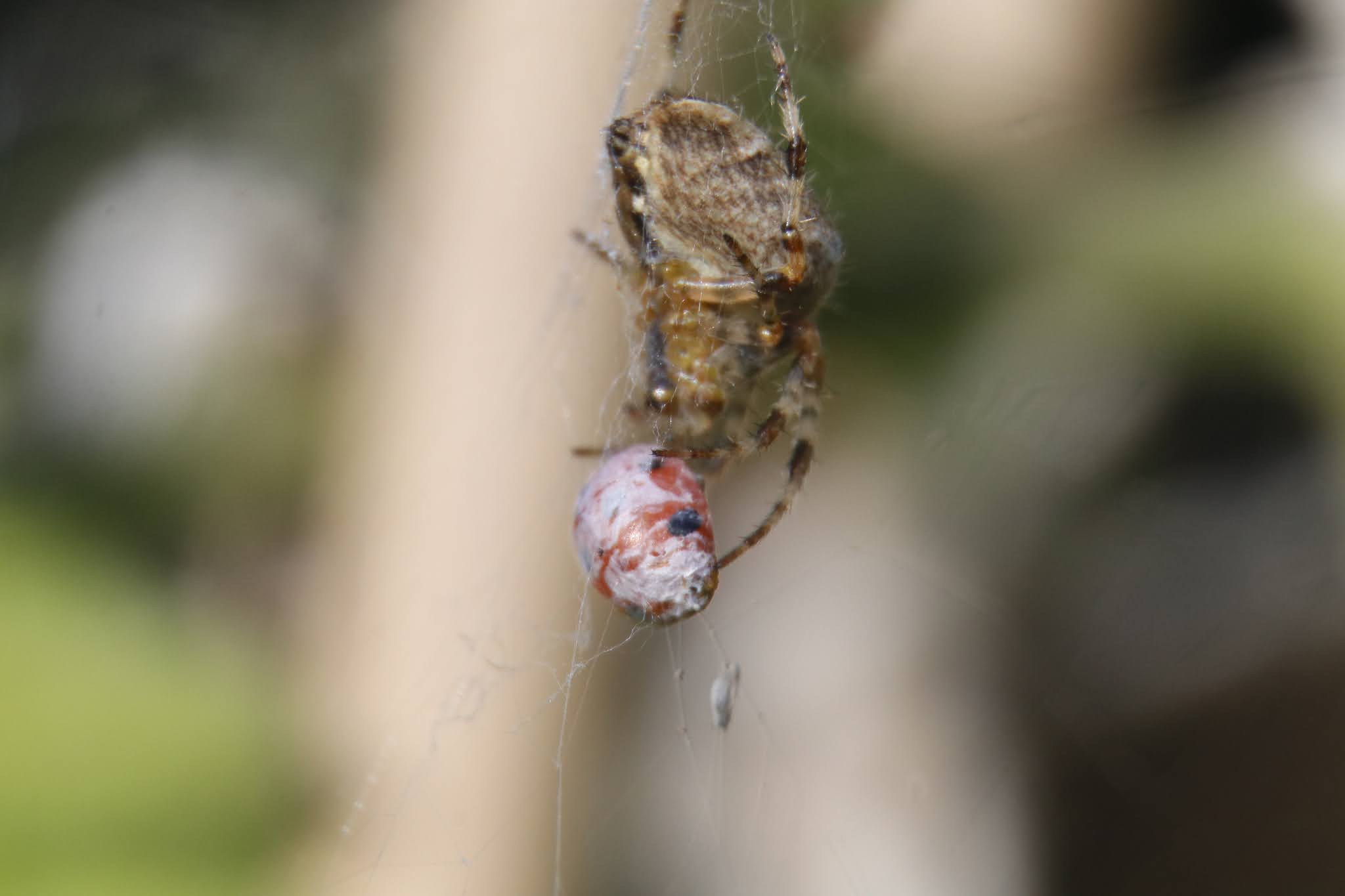
Spider with its ladybird prey

The new guidance for use of land states that 30% of our land must go to wildlife conservation and that include gardens as much as the general countryside. Attracting wildlife is easy, no matter where you live, and as you can see, one non-descript suburban garden can encourage a lot of wildlife. It doesn't even take much effort to attract wildlife, as most wild species crave unmanaged, overgrown areas of land, so just by leaving an area of uncut grass, one can go some way to being beneficial to wildlife. And by creating land for wildlife, the benefits of being amongst nature is beyond measure.


Wednesday, 6 January 2021

Christchurch Park - Winter 2020/21

Christchurch is the crown jewel of Ipswich parks, and one of the best urban parks in the country. An undulating area of parkland, Christchurch forms a large slice of greenery in a built up area. With many old gnarled trees, an arboretum and the Wilderness Pond, Christchurch is an important area for birds within Ipswich. Whenever I'm in town I drop into the park to see the fluctuations in birdlife, and right now it is very much mid winter, with certain areas seeing an influx of birds.

Many birds call this place home, birds which are so used to humans, they have become very tame providing good opportunities for photography. And for a lot of people this park is their main access to nature, whether it be feeding the ducks or taking a photo of Matilda the owl, and for that its very important to spread the value of nature.

There is often a CORMARANT on the fallen tree in the Wilderness Pond

When it comes to birds, the Wilderness Pond is the go-to place in the park. Probably the best bird watching site in Ipswich, this small lake is home to an assortment of mongrel MALLARDS, many CANADA GEESE and of course the MANDARINS. By a mile our most colourful of birds this is the main Suffolk site for this beautiful duck, a naturalised bird from China, that has found its niche, as its the only English duck to nest in trees. This winter the number of mandarins has been quite low with just the three birds present, usually numbers are in the early double digits. The many wooded islands provide safe nesting for the wildfowl on the lake. On the 28/12 a LITTLE GREBE was present, in 2019 this species tried to nest here but failed, so fingers crossed this dabchick will stay for the summer.


MATILDA falling asleep in her hole in the tree

Away from the Wilderness Pond, the park is a large area of rolling grasslands with many old trees. Situated on the top of one of these ancient gnarled sentinels is what is the country's, or maybe even the world's, most famous wild TAWNY OWL. Her name is MATILDA, thought to be the daughter of another famous owl, MABLE. Uniquely for an owl this bird sits up in a hole at the top of a tree in broad daylight, when usually they stay under thick cover. As a result she is very popular and there are often many people congregated under her tree taking photos, which doesn't seem to faze the owl in any way.

The owl is only present in winter, and by mid February had disappeared.

There are several pairs of CANADA GEESE on the Wilderness Pond

The park is home to many of the birds associated with parkland, with the likes of STOCK DOVES, MISTLE THRUSHES and GREEN WOODPECKERS being common. Although present in good numbers being in an urbanised place their numbers are lower than out in the countryside, as they are cut off by the urban desert that surrounds the park, created  by human habitation. Usually a couple of GREAT SPOTTED WOODPECKERS start to drum at this time of the year, their rattling sound echoing out across the park.

Winter though still has the country in its grip and on the 17/2 a large flock of 50 REDWINGS were present, at the top of the park, near the playground, feeding on the soft mud. 

This brood of MALLARDS was born in mid November, and surprisingly five have managed to grow to near adulthood.

Urban parks can be very important, not just for wildlife but also for the many people who use them. Christchurch is a very well maintained park, as are most of the parks within Ipswich, the town has a very enlightened attitude to its green areas. Christchurch park is the best place in Suffolk to connect with MANDARINS and TAWNY OWL, a visit in early January is a guaranteed tick for the year list of those species. So expert or beginner, all can appreciate what the town has in this oasis of greenery, and just shows that nature is important for everyone.


Friday, 1 January 2021

Staveton Thicks - 26/12/2020

There are some really beautiful areas in Suffolk, mystical ancient places, places from way beyond human civilisation, places with roots that lead to something much deeper. Staveton Thicks is one of those places, a forest full of ancient gnarled trees, a place that has survived for hundreds of years despite everything going on in the land around. Somehow Staveon still lives, and not just some token little forest, this place is large. It is not a nature reserve, no one who owns it is a charity, this is part of the working countryside. Although I don't normally gush like this, and I don't want to appear all hippy-dippy, its jut so difficult to describe in words what aura this place exudes.

The trees are the stars of Staverton. Many hundreds of years old, they have been allowed to develop into their own work of art. Each specimen is made up of unique tortured shapes which writhe beneath the surface of bark giving each tree a concept of movement despite standing still.

There are two types of habitat present here, ancient woodland with its thick layers of woodland growth, and wood pasture, which is open grazed woodlands with no understorey. Wood pasture once a common habitat is now extremely rare, the best example of this habitat is found in the New Forest, where commoner livestock graze open woodland. There aren't many examples of it in Suffolk, which makes finally visiting Staveton so interesting. The one concern for this habitat is a lack of young trees present in the wood pasture. This means when these old trees do die, there aren't any younger trees to replace them.

The woodlands in winter can be very quiet. A far cry from the bustling life of Spring, woods in the colder months can feel desolate and lonely with only the odd winter THRUSH present. There was a small amount of half hearted chirping in the forest but this wasn't a good time to see woodland birds.


Picture of the many old trees in the forest

Beyond the forest there are some man made pools, which may have been old fish ponds for the nearby abbey. They were brimming with life, something unexpected after walking through the forest. Amongst the 40 or so TEAL present, there were singles of GADWALL and MALLARD, and bird of the day, a female HOODED MERGANSER. Yes, I had to take a double take with that, but I know this species well as one hung out in Ipswich about a year ago, a male, but it spent some time in eclipse plumage. That bird in Ipswich was ringed, but however this one today was not, whether its a genuine wild bird or an escape, who can tell, and no one will quite accept it. Aside from the ducks also present fishing in a ditch was a GREAT WHITE EGRET, which I unintentionally spooked into flight, they are just getting everywhere now, but still a surprise to see here.

A pig field bordered the woods. I love pigs, they are so charismatic, but in turn they do destroy the land they live on.

I really thought I knew every place in this great county of mine but today I had my eyes fully opened. There must be many such strange and mystical places like this across the country, ancient places that somehow survived the ravages raged across our countryside. Maybe it is just a block of green on the map blandly indicating a hidden gateway to new worlds. So get out there, get exploring and find your own Staveton.