Sunday, 25 July 2021
Lackford Lakes - 23/7/2021
Friday, 23 July 2021
Carlton Marshes - 9/7/2021
The premier reserve of the Suffolk Wildlife Trust, Carlton Marshes, is a large chunk of wetland on the border of Lowestoft, within the Norfolk Broads. Most of the reserve is brand new, a huge purchase of land, that was achieved following a large appeal. From what was, before the purchase, degraded farmland is now a bustling wetland full of birds. This is a testament to imagination and foresight, to see something remarkable in what was unremarkable.
A big statement for the reserve is the huge new visitors centre, a brand new embellishment for a brand new reserve. One of the joys of visiting nature reserve cafes is the comparison between the different cakes they sell, more specifically the scones. Minsmere has great scones, other reserves not so. Carlton Marshes unfortunately has no scones, although it had some nice cake slices. But where else can you enjoy MARSH HARRIERS flying in the distance whilst enjoying a coffee. From the centre the reserve opened up before me, stretching to the horizon in this flat land, a sea of grass, moorland perhaps, but something wild, a new land that somehow feels timeless, like something dating back to prehistory.
This was my first visit to the reserve since the pandemic, and it had changed quite a lot. The new reserve is huge, stretching from horizon to horizon. Since the time I last visited the Trust has had the chance to modify the land. The southern section round Share Marsh is more overgrown with reeds, alongside which grazing has created a good range of habitats. Wet flashes predominate in this area, each one seeming to harbour a MUTE SWAN family. From the Lookout Hide, I found a SHOVELLER brood of three on one of these flashes, a bird that despite being a common winter visitor to our country, is a fairly rare breeding bird, and a testament to the work done by the Trust.
A common sight on the reserve was the CHINESE WATER DEER, an introduced animal that has found its own niche in this country, inhabiting the marshes of East Anglia. They are smallish deer that don't have antlers, what they have instead are these long canines, like the fangs of a dog. Originating from China, they escaped from deer menageries, and the UK's Population may be of some importance as their population declines in their homeland. They are quite easy to spot, running around the areas of grassland, and don't seem to be too bothered about humans.
The centrepice to the reserve is Peto's Marsh, which is a combination of wet grassland, and the home of an embryonic reedbed. Scrapes have been dug into the land to attract water birds, shallow bodies of water, that are just as attractive to us birdwatchers, allowing me to set up the telescope to observe the birdlife. There are two hides, but because everything can be viewed from the river wall, they are really shelters for bad weather. Annoyingly this area of the reserve is the furthest point from the car park, so expect a long walk if visiting.
The first scrape, overlooked by Turnpike Hide, was the best for WADERS, an area of water in some grazed grasslands. Star bird was a WOOD SANDPIPER, an uncommon Autumn migrant (yes with some birds we are really are in Autumn) to places like this. Further Autumn migrants were present with three GREEN SANDPIPERS, stalking the muddy areas, in and out of the tuffs of sedges. Breeding waders were very much in evidence with large numbers of young REDSHANK present, all of various ages and different sizes and plumages. You don't often see young redshanks, the parents usually keep them in the longer grass to escape from the eyes of crows and harriers. Young Avocet were also present, mostly grown now, but with shades of brown in places. This evidence shows this area is good for breeding birds, already so early in its life. For waders to breed they need water, which by new management the Trust has added to the land, creating new habitat in what was unproductive farmland. Newly created wetlands are often full of birds, as at the beginning as the newly flooded area is fertile and rich in insect life, enticing them to settle. It will take a few years before things stabilise, but the area should stay attractive to birds.
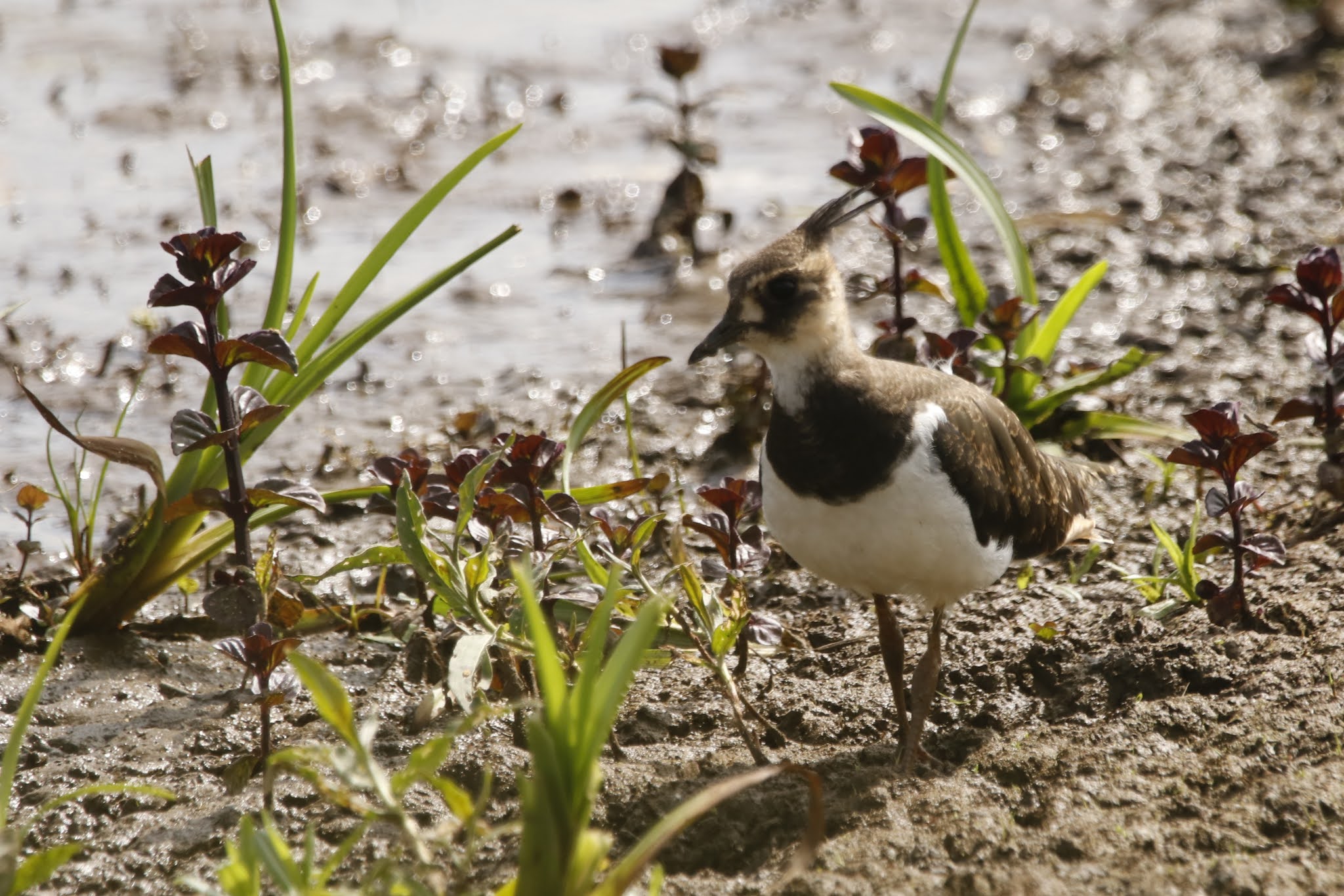
A walk further along the river wall led to North Hide which overlooked a scrape within the newly created reedbed. On this piece of water was the ends of a GULL colony, having by this time nested and raised young, they were now on the verge of leaving, and an EGYPTIAN GOOSE was also present. Further along the wall, before the path ended at a gate, was another scrape, in which four GREAT WHITE EGRET were present, often in the same binocular view as its smaller cousin the LITTLE EGRET. Later on whilst walking back to the visitor centre, I had a nice view of a LITTLE RINGED PLOVER in flight, another Autumn migrant wader, which rounded off a good day of birding.
Sunday, 18 July 2021
Minsmere - 2/7/2021
July promises that excitement that the beginning of Autumn migration delivers, whether the season will be as interesting as you hope, or a massive let down. At this time of year the birds start to leave their breeding grounds and head to wintering ones, passing off at places like Minsmere along the way. During early July its the WADERS that are on the move, making it an exciting time of year, where the mind begins to wander at what might be about. And where better to see migrant waders than Minsmere.
The Scrape is world famous for its migrant waders, a habitat that was first created at Minsmere, and one that has now gone on to be replicated world wide. Basically waders need mud to feed on, because that load of gloop contains millions of little invertebrates which waders feed on. And as Autumn comes along more and more mud on the Scrape is exposed as the strong sun of summer dries the shallow water out. However due to this summer being a wet one with lots of rain, the result has been that water levels are a lot higher than normal, with less mud, so its a wait and see for what late summer brings. Wader migration peaks in late August, early September.
At this time of year the waders are still in their breeding plumage finery. Waders can look stunning at this time of year before they turn grey for the winter. The main stand out bird is the RUFF, with two present, one on South Scrape and one on West Scrape. No two birds look the same as each bird has their unique plumage which can be a wild splatter of very different colouring. Today one had ginger upperparts with a black underbelly, resembling a wild jungle fowl chicken, whilst another had white upperparts to black below. By August they will have moulted out of this finery and will resemble a redshank type wader.
That specialist of early Autumn migration is the SPOTTED REDSHANK, present from mid June, which at this time of year is dressed in an all black plumage, with white spots, making it very distinctive. Nine were present, five on East Scrape, three on South and one on West. There were plenty of other less showy waders, with three TURNSTONE, one GREENSHANK and one DUNLIN on South Scrape, three CURLEW on East Scrape and one GREEN SANDPIPER on West Scrape creating a good mix for so early in the season.
The usual BREEDING WADERS were about, there were several fledged AVOCET, the juveniles looking like the adults now, except being a light brown in places. However it doesn't seem to be a good breeding season for them, as not many were present. A REDSHANK was constantly in display flight on Lucky Pool on the Levels, for what reason I'm not sure, as this species has usually nested and fledged young by this time. Must be a lonely bachelor.
There had been a small build up in DUCK numbers on the Scrape, especially on West Scrape, with newly arrived TEAL amongst the resident birds. An over summering WIGEON was on West Scrape, a bird left behind by his other compatriots. There were several broods of SHELDUCK about, these families can get quite ridiculously big, with ducklings numbering into double figures. The BARNACLE GEESE also had several broods as well as all the other geese. With all its marshlands Minsmere is a haven for breeding waterfowl.
Of course being early July the breeding season was still in progress which just shows the complexities of birdlife, how birds overlap with each other at varying stages in their life cycle. Arriving later in the season, the COMMON TERNS missed out on the frigidness of April and the heavy rains of May. As a result unlike the GULLS, which had a terrible season, getting washed out, the terns have had a bumper breeding season with large numbers present. On parts of East Scrape and South Scrape there were lots of birds nesting with a good number of young chicks present. Good numbers of SANDWICH TERNS were about on South Scrape, although they don't nest here, they were just roosting. Also present on South Scrape were 20 LITTLE TERNS, this dainty little bird has started to nest on the Scrape, where habitat has been created for them. This small tern has been scared away from their usual breeding location, the beach, by the large numbers of human sun seekers who come to the coast of Suffolk. The only MED GULL present was an adult on the Konik Pools.
Out on the dunes the usual pair of STONECHATS were present in the gorse bushes by the Sluice. The female chased away a SKYLARK that had alighted too close to where they were nesting, a truly devoted mother. A small flock of three fledged juveniles were proof that breeding has taken place near by somewhere on the huge stretches of heathlands. There were lots of LINNET flying around, a bird which despite having suffered a large, long decline, has now seen numbers stabilise and starting to increase again. I see a lot more numbers out in the countryside again.
Away from the Scrape, the vast swathes of habitat that makes up Minsmere are full of birds. Huge areas of heathland, woodland and reedbeds are fully alive to the thrall of nature. Its in the reedbeds, which for so long has been a haven for extremely rare birds is where you will find Island Mere, which threw up some goodies birdwise. Island Mere, a large lake in the reeds, was the destination of the usual moutling wildfowl, with around 100 GADWALL and 20 SWANS present, with a couple of recently hatched GREBE chicks amongst them. In the quiet peacefulness as I was watching the birds at this pleasant spot, everything was disrupted when there came the sound of a squeeling pig from the reeds in front of the hide, which was the somewhat distinct call of the WATER RAIL. Several BEARDED TIT could be seen flying around in the reeds, beautiful russet coloured, long tailed birds, the male has a distinctive moustache, hence its name.
A HOBBY was seen flying over the reeds, with another one over the woodlands later, whilst large numbers of MARSH HARRIER were about, as they breed here in good numbers. One pair conducted a food pass, when a male with prey approached the nest, the female rose up to him and turning upside down beneath him caught the prey that was dropped to her. Its these simple things in bird watching that can be so thrilling.
Today's trip to Minsmere brought a fine display of early July birding, the classic mix of early Autumn and late breeding season birds. Minsmere is the perfect place for bird watching at any year, with the vast array of rare habitats attracting so many and so diverse amounts of wildlife. This richness is pretty much unique to Minsmere, as although plenty of other places are good and provide great spectacles, Minsmere just has so much diversity. If you ever wondered if you would enjoy nature watching, head to Minsmere and find out, because there is no better place to do it.
Tuesday, 13 July 2021
Pipps Ford - 25/6/2021
The only GREAT CRESTED GREBES to have raised young in the area were here with a brood of three. WATER LILIES were growing in this intensively fished little lake, but not much else.
Riverside Farm Pit
This small lake - more like a large pond - was fairly busy. Standout bird was a WOOD DUCK, obviously an escapee as they originate from America, it was quite a strange sighting here, feeding on the grass that surrounds the lake. 30 CANADA GEESE provided the numbers and a pair of SWANS hadn't started nesting yet, if they intend to at all.
A GREY WAGTAIL was present around the lock in the river here, they usually nest in this area so hopefully they will do so again this year.
Pippin's Lake
Another, small lake, with wooded surrounds, Pippin's held good numbers of GADWALL, with two broods of three and four, plus twelve more adults, which were good numbers for the area at this time of year. It seems that around Pipps Ford gadwall are the most common breeding duck, more so than mallards. Also present were a SWAN brood of six, this is a regular nesting site for this bird, I disturbed them, by accident, the adults hissing at me as they swam away.
The Exhausted Quarry
For some reason this area is completely submerged under water, forming a little lake, when usually there is some wet grassland in the mix. This increase in water has benefitted the local COOT population with three pairs nesting here. Two of the pairs were on second broods, of five and two, with the other pair still on their first, of two. In case you're wondering about coots, they're doing well, no need to worry at all with them. The young birds have little red heads, which confused me when I younger. I used to think they were moorhens who were hanging out with the coot. A pair of LITTLE GREBE were about, but haven't nested yet, if they're going to bother at all.
The surrounding rough grassland was coloured white in parts with stands of OXEYE DAISY, and blue with VIPER'S BUGLOSS. SKYLARKS flew around the grasslands carrying food to the nest, this area is really good for this declining bird.
The Active Quarry
This place is always changing as the diggers work on the land. Lorries come and go, creating lots of disturbance, and I wonder why birds bother with all this, but bother they do, and you can see plenty of birds around all this human activity. The active quarry is a large area of water with islands and some mud, which proves attractive to birds.
Another GADWALL brood, this time with three ducklings. There were small numbers of other wildfowl, with two pairs of TUFTED DUCK, a pair of LITTLE GREBE, and nesting GREAT CRESTED GREBE.
A couple of WADERS were about, which could be birds still nesting or wandering autumn migrants. One LITTLE RINGED PLOVER, four LAPWING and an OYSTERCATCHER were here.
Unfortunately the SAND MARTIN colony has disappeared this year. They usually nest in the sand cliffs of the active quarry, but this year they have deserted the area. This has also happened to another colony, Minsmere, where birds have decided not to nest there either. This could be alarming, a crash of colonies, or it could just be the capriciousness of birds, and they are nesting elsewhere, its hard to tell.
A quiet time of year, compared with any other, but it still throws up some interesting sightings. Even the most unpromising of places can throw up the odd goodie, allowing you to doubly savour it if its on a local patch. These places are your places, the ones where only you bird watch, ones that you know like the back of your hand, where you will sniff out any rarity. They make bird watching that extra bit juicy, adding another dimension to this glorious hobby.
The Farne Islands - 17/6/2021
The centrepoint to my holiday in Northumberland was a trip to the Farnes. These islands are home to hundreds of thousands of sea birds that nest on the cliffs and remain undisturbed by anything like human civilisation. Due to the coronavirus pandemic lockdown still in operation, we were not allowed to land on the islands. Instead the bird spotters like me had to take a boat trip around the islands in and out among the cliffs and the many, many birds. We certainly got our money's worth, with no less than three and a half hours spent on the sea, so if you're in the area its well worth a look.
I departed for the Farnes from Seahouses harbour, on an open boat which allowed us to sit through the boring parts, yet gave enough space to stand up to take a photo. In the harbour, EIDERS were present, with several broods of little brown ducklings bouncing around on the water.
Out on the water, to begin with, there were no birds present as we sped towards the islands. But the closer we came to the Farnes, the numbers of birds began to build. First there were the odd birds, singles that would fly off when approached by the boat, before growing in number as we got closer to the islands.
The bird present in the highest number was the GUILLEMOT. These brown and white birds nest on the cliffs in huge numbers, where up to fifty thousand of them can be present round the islands. Nesting in tiny little territories, on the cliff face, they weren't too fussed by the boat, flying away when we got too close, but fairly chilled, allowing for nice close-up photos.
It didn't take long to get to the islands. The first set of islands are dominated by Inner Farne. This is one of the two islands that used to be accessible for visitors, where people could disembark to take pictures of the birds nesting on the islands. However due to the pandemic no entry was allowed. This restriction also applies to wardens and as a result there has been no management on the islands. This has had an unhappy consequence, for without this management the vegetation has grown too long, which has had a knock-on effect for the ARCTIC TERN colony. The terns prefer the shorter vegetation on which to nest, but now it has grown too long for them and the bird which nested there in huge numbers has seen its large colony collapse this year.
Outnumbered by the guillemots, by a large ratio was the similar looking RAZORBILL, another bi-coloured auk. As with all birds there are ways to tell them apart if you take the time. The main difference is that the razorbill has an impressive large, thick bill, like a barber's razor, to which in comparison the guillemot's is quite dainty. The less noticeable difference is that the razorbill has black upper parts whilst the guillemot's is brown.
After Inner Farne the rest of the islands were dominated by sheer vertical cliffs rising from the sea. The cliffs of the Farne Islands although not overly tall, are dramatic and the bird populations on them are huge. The best way to describe these bird population as are sea bird cities, the populations here numbering that of a small size British city. With no humans and no disturbance the birds had total control of the islands and were free to nest everywhere and did so in profusion.
The first two auks described, the razorbills and guillemots, would allow the boat to come close, some moving away, some flying, but were not overly fussed. The PUFFINS, however, would fly away on their stubby little wings if the boat came too close. Beautiful and popular birds, their over sized multi-coloured beak is always a pleasure to the eye. The puffin is the original and northern hemisphere penguin, with the exception they can fly. Unlike the other auks, puffins didn't nest on the cliffs, instead they nest in burrows on the island tops out of view of us down in the boats. Occasionally I would get a photo of them on a cliff top, but usually they were down on the sea. The majority of my photos were of out of focus puffins flying on the sea.
SHAGS as usual were common, out numbering their larger, blacker cousin the CORMARANT. Shags are smaller and are a green colour, but are less familiar to people down south, unlike the wide ranging cormorant. KITTIWAKES and FULMARS were also present in large numbers. Kittiwakes are our true "sea" gulls, only ever coming to land to nest on these sea cliffs. Fulmars resemble gulls but are from a different family and have stiff wings, limbs that don't bend. Like all these sea birds they are just here for the summer before returning to the vast seas over the rest of the year.
GREY SEALS live in the area in their thousands and many were seen today, whether a head bobbing up in the water or a full body resting on the rocks. The UK has a large chunk of this species' global population, where they are doing perfectly fine. Seals are my favourite wild mammals, such intelligent, inquisitive animals, that watch you as you watch them, truly the most charismatic of wildlife.
The boat made its way through the islands stopping off at interesting points to allow us on board to take photographs. The main criticism I aim is at myself, how I spent all my time taking photos, without taking the time to really take it all in. I failed to pause and just appreciate what was going on around me. It was just there were so many photography opportunities, that I maybe saw the whole wildlife experience through a lens. In the end I took around a thousand photos. What fun it was wading through them to create this blog.
A wildlife spectacle like no other, the seabird cities of the Farnes are truly something to be seen. Only a few places like this exist in the world, so each place must be guarded. Although the birds are doing well, overfishing and other negative activities on our seas are having a negative impact on these birds. As with all conservation problems, the solutions are fairly simple, its just that people can't accept change. Anyway, the birds are still here, so go out there and see them.
Friday, 2 July 2021
Druridge Bay Reserves - 15/6/21
Further down the Northumberland coast are a series of lowland wetlands set back from the sea. Based around old opencast mines that have been left to become overgrown by nature, which has resulted in them mainly becoming large lakes, they make for good birdwatching country. Managed by the Northumberland Wildlife Trust under whose guise they have been carefully managed for wildlife, these reserves are a haven for birds. Connected to each other by a ramble down the coast, they are accessed along the long distance footpath which snakes its way from reserve to reserve . These are quite important Northumberland reserves and I've been wanting to see these them for a while and now I finally got the chance.
Hauxley
The first reserve I visited was Hauxley, the most northerly of the reserves. Its a focal point for the area, with toilets and a café providing civilised amenities absent from a lot of nature reserves. The reserve consists of a large lake surrounded by hides with a small amount of peripheral land. The lake had a variety of islands and were a haven for birds.
The most obvious birds were the GEESE with hundreds present, these birds have increased to almost plague like numbers and at a lot of places are out numbering and out muscling all the other birds. DUCK wise there were also some TUFTED DUCK, GADWALL and a pair of SHOVELLER present, the usual birds of this kind of habitat at this time of year. There were some roosting GULLS and TERNS, but nothing special.
Probably the most sought after bird on the reserve was the TREE SPARROW. This is one of those birds which used to be extremely common right across the country, but whose population crashed due to the increased industrialisation of agriculture in the countryside. Nowadays there's only a couple of pairs in Suffolk, so they are difficult to find at the best of times. They are similar to house sparrows, but are birds of the countryside and are seldom seen in areas of human habitation. At Hauxley they were seen from a special hide, over looking some bird feeders which attracted a flock of the birds. Strangely enough the viewpoint was called the Skua Hide, the least appropriate name for a hide possible, really. Also around the reserve it was good hearing a WILLOW WARBLER, a once common bird that has become extinct on the Suffolk coast, although its still common up north.
From Hauxley it was a walk to the dunes and from there I wondered down the coast to the next reserve. There was plenty of nice, easy walking available, either walking the long distance footpath, or simply walking long the beach.
East Chevington
This reserve was a huge lake formed from opencast mining, with a reed periphery. Being June not much was present, because at this time of year the birds are in low densities as they nest. It is in winter when the birds all join together, creating large flocks so a visit then is probably the best time to visit. Present today was the same sort of birds as Hauxley, a few DUCKS, some GEESE, although not as in high numbers.
A second, smaller pool, held a large stand of reeds where a female MARSH HARRIER was quartering. Speaking to local bird watchers, they were really chuffed to have harriers nesting here, with five pairs present. Me, being from Suffolk, am much more blasé.
Walking down the coast along the coastal footpath from East Chevington, the path travelled down a large stretch of dunes. This large amount of rough grassland was really good for birds. Three pairs of STONECHAT were present along this route, as well as large numbers of MEADOW PIPITS and SKYARKS, often in song and display flight. A common flower in the dunes was the beautiful BLOODY CRANESBILL, a deep red flower low growing in the rough grassland. At one point a MED GULL flew over, giving a nice record.
Druridge Pools
The final reserve I visited today, although there is another one further down the road, was Druridge Pools. At Druridge a hide overlooks a pool in some wet meadowland, and another a former opencast lake. The wet meadowland pool had a variety of breeding waders, with some young AVOCETS present. Two ROE DEER were frolicking in the higher land behind. The lake held the usual wildfowl.
A nice exploration of some Northumberland wetlands, a bit different to the bird cliffs further up the coast. These are probably the best area of freshwater wetlands in the county, and although I visited at the wrong season I still saw some good birds. Such is the variety of decent bird watching sites in the county, you can make several visits to Northumberland and still spend your time exploring new areas .