Tuesday, 7 September 2021
Pensthorpe - 25/8/2021
Friday, 3 September 2021
Titchwell - 24/8/2021
With Cley done it was inevitable that I should spend my second day in North Norfolk at Titchwell. Similar to Cley, Titchwell is an expanse of reedbeds, scrapes and beach, that provides a haven for many birds, often attracting some unusual ones. Its a great place for WADERS, and a trip at this time of year usually guarantees a sight of some of the scarcer common species. But with winds not being particularly kind (the sort that would blow a rare migrant off course), and with not much being about in particular, I wasn't expecting much.
Having take nthe bus, I stepped off, outside the reserve, and walked within, with that air of expectation as to what I'm going to see. The footpath through the reserve is one long line which runs perpendicular from the car park, with its visitors centre (and a nice coffee), to the beach. It traverses a succession of habitats that range from woodland around the car park, through reeds, freshwater scrapes, tidal systems, before eventually finishing at the beach and the sea, the natural end point for all habitats on this island.
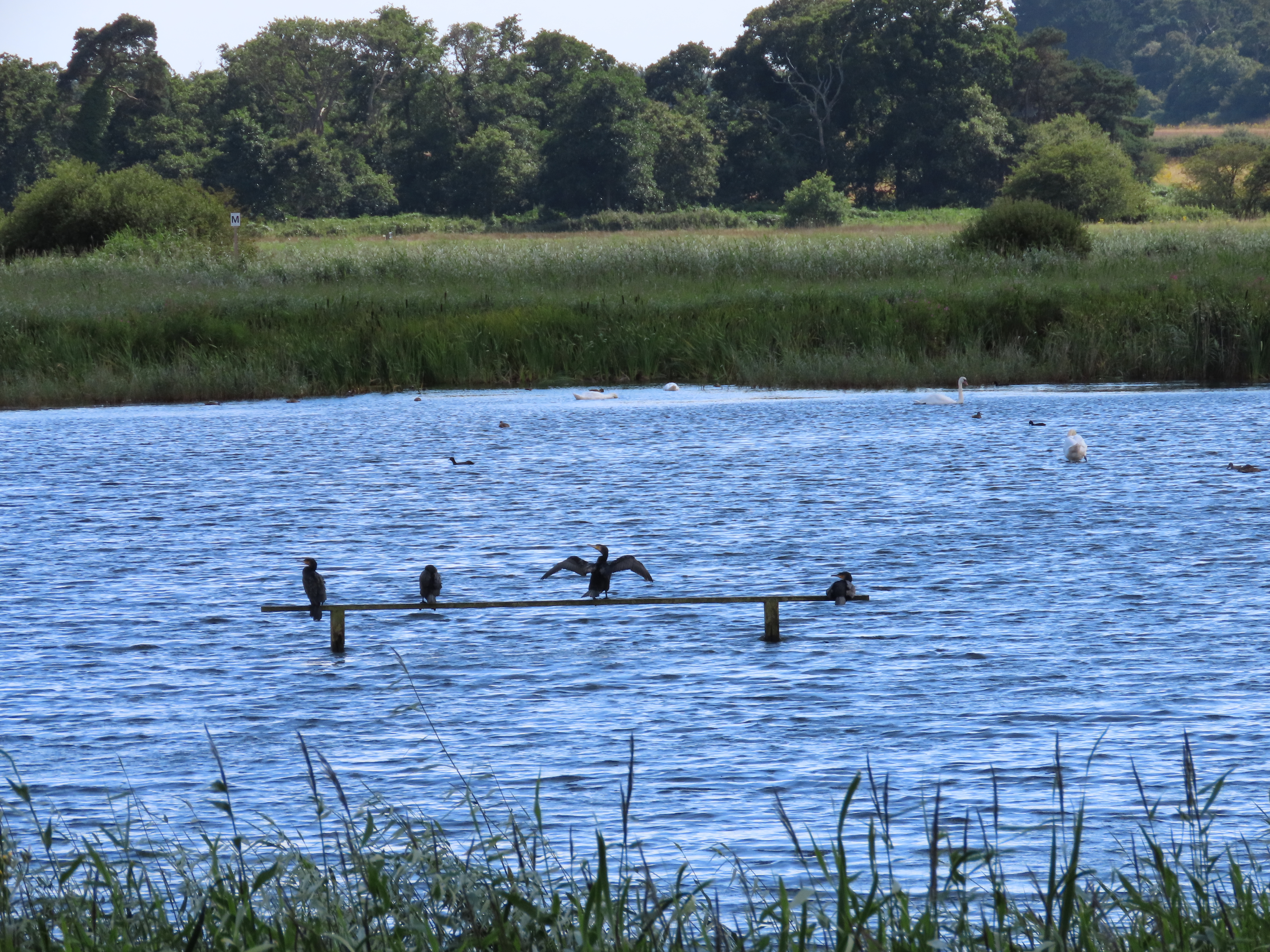
As you would expect from this time of year, the reedbed was quiet, the pools holding small numbers of ducks. A GREAT WHITE EGRET was about turning up at different points at the reedbed pools, preferring the deeper water found within the reeds, to the shallower water present further on.
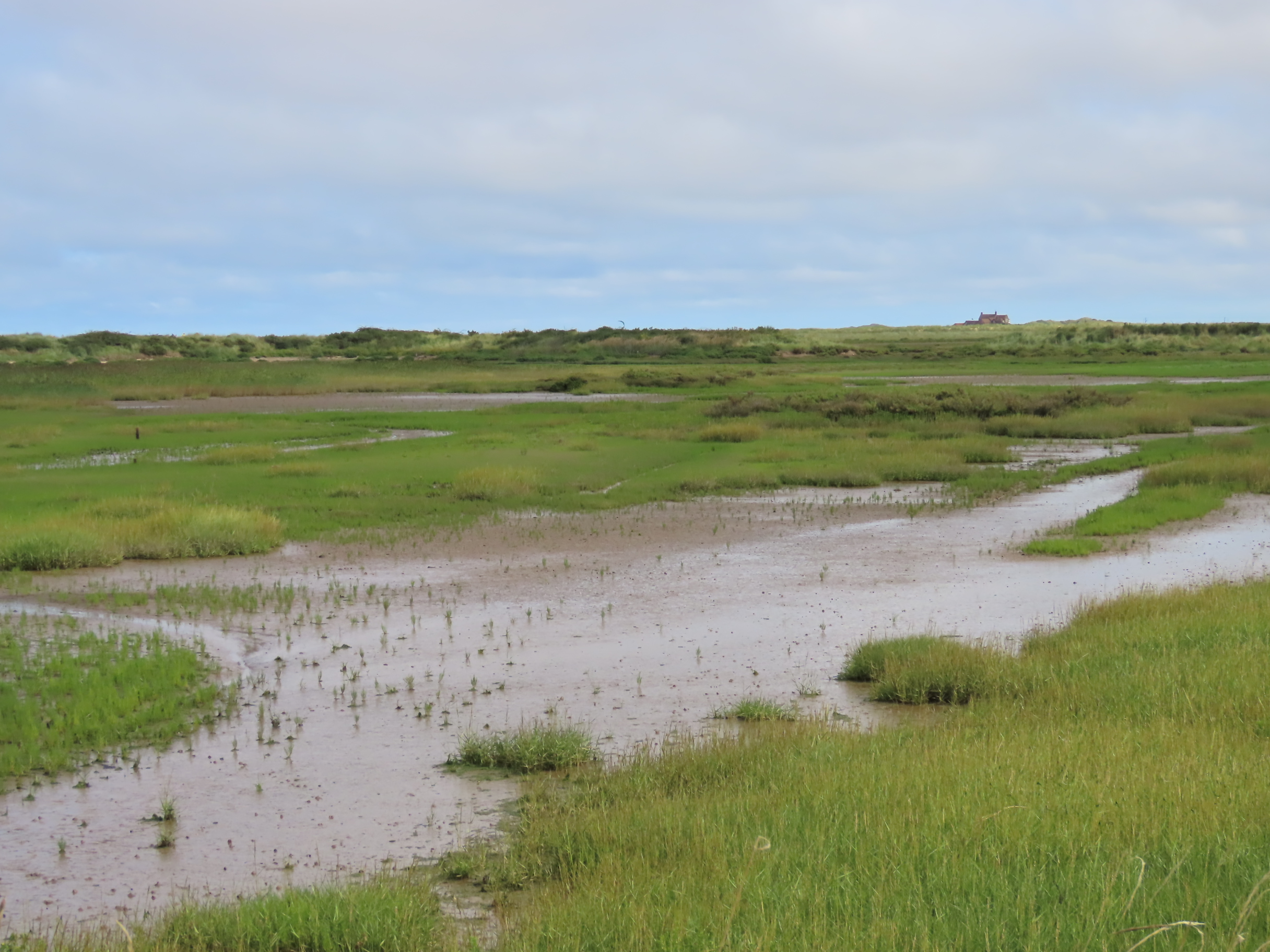
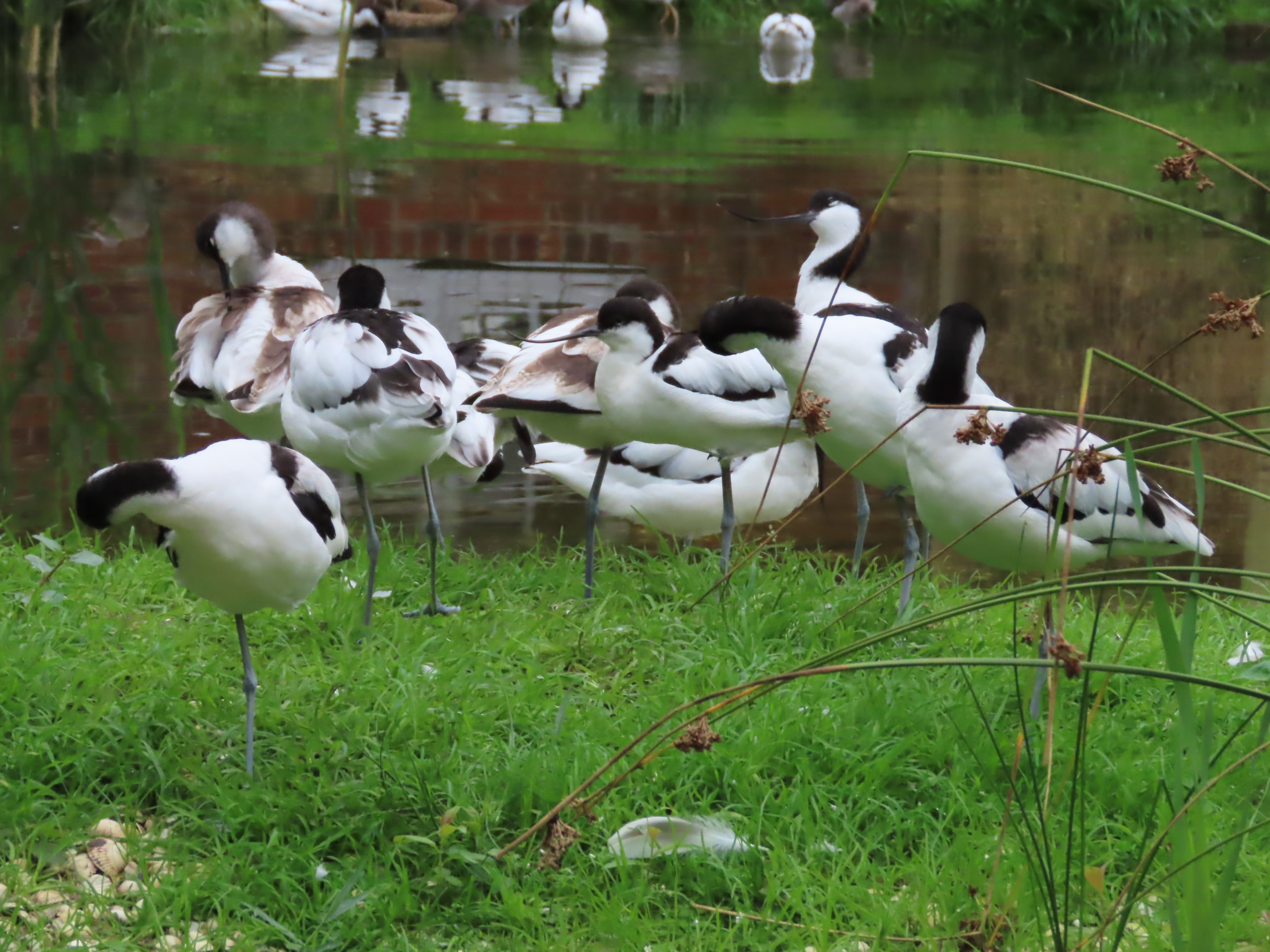
It wasn't until I got to Freshwater Marsh that things stared getting interesting. This body of shallow water is the best point of the reserve, where mud caused by receding water levels over the summer attract plenty of DUCKS and WADERS. However, recent habitat management has meant large diggers were working here, which has scared away the ducks but the waders didn't seem to mind, even though they kept a safe distance. The habitat management is taking place to create more islands for nesting waders, particularly AVOCETS, and doing it at this time of year results in less disturbance, rather than doing it in the breeding or wintering seasons.
And on Freshwater Marsh there were plenty of AVOCETS lingering from the breeding season, and with the work going on, they will only increase. Also about were usual collection of WADERS you would expect to see on a North Norfolk scrape. These birds will be on Autumn migration, heading away from breeding grounds to their wintering ones. Most populous were RUFF with around 50 present, lots of BLACKWITS and 15 GOLDEN PLOVERS a good number for the time of year. Just as at Cley a CURLEW SANDPIPER was present in a flock of the similar looking DUNLIN, as they always seem to at this time of year, birds often join flocks of similar looking species, I guess because they are just lonely, at a site like this on their own, they just want to make friends.
Also present on Freshwater Marsh, on the exposed mud before the reeds, was a juvenile WATER RAIL, a common bird of reedbeds, they're just so bloody hard to see! They spend all their time skulking about and never like being away from cover for long. They have a call like a screaming pig, which you hear quite often erupting out of the reeds.
As the path gets closer to the beach it passes a series of tidal pools, designed to reduce the pressures of rising sea levels on the reserve. Volunteer Marsh was looking good and has now become overgrown with saltmarsh, which is good as its fairly new in construction. However, there were few birds on these pools, so it was a further trudge to the beach.
And then it comes on you unawares, the climax of the walk down the reserve, the beach itself. The path walks out on the dunes, and there you are hit by an endless horizon, sand for miles and miles in both direction, with the sea in front of you, making you pine for the safe closeted land of the nature reserve.
On the edge of the sea water WADERS fed, different kinds to the ones found on Freshwater Marsh. Here are the species that enjoy a saltier snack. They particularly enjoyed a mussel bed exposed by the receding tide. BAR TAILED GODWIT, CURLEW, OYSTERCATCHER, REDSHANK, TURNSTONE and SANDERLING were about. The latter are a grey/white colour and run up and down the tide line looking like wind-up toys.
To get away from the beach its the same walk back again to the visitors centre. Just off the main path, back near the car park, a small trail along a boardwalk takes you through reeds until you get to Patsy's Pool, an artificial pool now returned back to reedbed, Here all the WATERFOWL had concentrated, mainly GADWALL, but with plenty of COOT, SHOVELLER and POCHARD. The GREAT WHITE EGRET was also about stalking any fish that happened to be out in the open.
A quiet time at Titchwell then, but you can't really expect more. Birds are never very predictable at the best of times, which makes watching them so interesting, if frustrating. August is always low energy, a lazy time of little consequence to the birds. The usual were about, there were no surprise omissions, it was just business as usual. And that is a sort of satisfactory thing to report.
Sunday, 29 August 2021
Cley Marshes - 23/8/2021
This was my first visit to North Norfolk in nearly a year, a welcome return to one of the best birdwatching areas in the country, a chance to see the two reserves of Cley and Titchwell. Both these sites are great for birds, and are very evenly matched when compared side to side but if I was forced to pick a favouirte, I would have to go with Cley.
A series of scrapes within wet grassland and reedbeds, Cley is a haven for migrant birds, which descend on the Norfolk coast at this time of year. WADERS are the main focus, as late August is the time when Autumn migration reaches a peak for them, although things seem a little late this year, or maybe its just a poor year. I'm still holding out for greater things to come.
The main focal point of the reserve are the two freshwater scrapes, Pat's Pool and Simmond's Scrape, overlooked by a series of hides, although one hide was closed as SWALLOWS were nesting inside. These scrapes are looking quite good with lots of mud providing food for the waders to feed on as they pass through. Pat's Pool, the largest scrape was crammed full of birds. A CURLEW SANDPIPER was present looking like a similar DUNLIN, although the CW is more elegant, has a more curved bill, longer legs, and a more elegant shape. Also present were two SPOTTED REDSHANK, an adult and juvenile, a KNOT, a GREEN SANDPIPER, and 24 RUFF.
From one of the scape hides, what must be one of the strangest sights of the day was observed. A BITTERN was seen flying high over the reserve, just about seen as a speck in the sky. Was this a migrant having arrived on these shores from abroad or a wandering local? Whatever, it was my first record for Cley, my first flying so high, and an unusual record for August.
On the nearby Simmond's Scrape things were a bit more quiet, with proceedings dominated by a SPOONBILL, standing astride the shallow water but mainly staying asleep, with its head tucked in. A LITTLE STINT present here was also good, the smallest of the scarcer common waders. Also around were a GREEN SAND and a SNIPE. Several BEARDED TITS were seen here, coming out from the reeds to feed on the exposed mud before. On the Scrapes there were plenty of TEAL, with smaller numbers of other commoner ducks, typically asleep, with their heads tucked in. Ducks can at times be low energy.
Upon walking out of the hides and along the boardwalk, a BROWN HARE graced me with its presence, bursting forth from the reeds, running along the path before disappearing again.
The reserve footpath is basically a square shape. One side is the East Bank, a footpath with reedbeds on the west side, and grazing marsh on the other, eventually leading up to the sea. Within the grazing marsh there were a good assortment of pools and scrapes, gradually becoming more saline as they got closer to the sea. Arnold's Marsh is the final pool, nestled just behind the dunestack. A large pool, its a good spot for esturarine WADERS, such as DUNLIN, CURLEW, REDSHANK and TURNSTONE. Also present were a decent number of roosting SANDWICH TERNS on the various islands, this is a good site for this bird.
Another of the side of the square of paths is the sea, walking along the dunes with the reserve to the south. Things were a bit quieter round here, with only a few GANNETS flying lazily offshore. Small flocks of WADERS were flying up and down the coast, with some SANDERLING being the most interesting.
From Cley Marshes I had a walk to Blakeney as I was staying at a hotel there. The route from Cley traversed the river bank along Blakekney Fresh Marsh, an area of rough grassland, grazed by cattle and sheep. Its not a nature reserve, but is fairly overgrown, with lots of reeds growing amongst the grazed areas. It was pretty quiet with the usual birds of open grassland. A typically brief STOAT was good as well as a TOAD sitting on the footpath, waiting to be trod on.
In the end it was a fairly standard August day on the North Norfolk coast, seeing pretty much what I expected to see, with a few strange sightings adding to the mix. North Norfolk is one of the best areas for birdwatching in the country, so a visit up there is always worthwhile, even if nothing much is around. I cannot complain though, especially as I get to spend my time doing a hobby I love, in places that I'm also so fond of. It can be a hard life at times.
Sunday, 15 August 2021
Hen Reedbeds & Blyth Estuary 13/8/2021
In the birdwatching world not too many places that can be like Minsmere, the kind of reserve that packs the birds in no matter what season. Even the best places can be quiet in the off season. So it was on a very quiet day that I went over to visit Hen Reedbeds. It was your typical August day, low on spectacle and low on energy. There wasn't really anything to see on the reserve, but I decided to include a post for completion's sake.
Hen Reedbeds is a Suffolk Wildlife Trust reserve, where they have flooded a river valley and let it become overgrown with reeds. It sits beside the Blyth Estuary, and with all estuaries timing is important as birding is always dependent on the tides and how much mud is exposed. As is the case when you don't plan for tides they are always either too high or too low, always at a height that's not best for birds. So today the tide was high and as a result there was little to see from the estuary. Walking along Hen Reedbeds there were a lot of BLACKWITS, with smaller numbers of CURLEW, OYSTERCATCHERS and DUNLIN on the rapidly disappearing mud. Apart from that there were few birds on the reserve, the reedbeds were quiet as they are at this time.
From Hen Reedbed I travelled down to have a look at the estuary at Blythburgh, and again the tide was high, with little mud for birds to feed on. There was a large flocks of REDSHANK roosting on the artificial banks on the side of the A12, before flying off across the estuary, they must have numbered around 300 in total. Also present here was a WHIMBREL, a smaller, similar looking, cousin of the curlew, my first of the Autumn, and an iconic bird of the estuary.
From Blythburgh I walked inland for a couple of miles along the river Blyth. Here the river, although thin, was still tidal. The landscape was of little use for agriculture, except a few grazing cows, so the area was fairly overgrown and left to nature. A KINGFISHER flew along the river and across some fields, probably the best bird of the day. Several COMMON SANDS were about, a wader that doesn't like flocks, with its bobbing tail and distinctive call, they usually hung around on their own.
Its here that the local Wildlife Trust wants to introduce ospreys, which if it comes to fruition is a good idea, as it might lead to more wildlife conservation being implemented in the area as well as bringing in the ecopounds to the region. Money and wildlife conservation can live hand in hand, they aren't two opposing ideologies always in conflict with each other. Ecotourism brings a lot of benefits to the Suffolk Coast, that other rural areas don't get, and it benefits the local communities around here.
An uneventful post for a rather uneventful day, and despite the effort I put in, and no matter how good a bird watcher I am, if there's no birds there's there's nothing to see, and nothing to write about. This area of the world is usually good for birds its just the high tide and a crap August day that did for it. Sometimes birdwatching is like this, some may say a lot of times. However if you're not an experienced birdwatcher don't think this is what its always like, pointlessly walking round a birdless countryside. Birdwatching is a highly rewarding pastime that allows a person to spend time in nature, to see another world away from modern life.
Wednesday, 11 August 2021
Minsmere - 6/8/2021
Autumn is gearing up, and there's an air of excitement as new and rare birds are being reported from the main reserves along the Suffolk Coast. At the moment the return migration is dominated by the movement of WADERS, as they take the long, relaxed route back to their wintering grounds.
Minsmere is always good for migrant waders, a welcome pit stop for tired birds travelling across the land. The Scrape, a world famous habitat of shallow water and islands, is particularly good for attracting them. Usually as the year reaches August the shallow water dries out and lots of fabulous mud is exposed, great feeding refuges for waders. However with the intense rains over the summer water levels remain high and therefore there is little mud to attract this family of birds. Despite all this a decent assortment were about and I saw fifteen species of this type of bird. The birds were constantly on the move, flocks flying in and out, seeming to ride in front of the brief rain squalls which drenched the land. Luckily I was able to dodge this weather and was able to ride out the fierce rain storms in the hides.
This time of year is always good for picking up rarities, those birds that have got lost on their journey. There were a couple today, a WHITE RUMPED-SANDPIPER and a PECTORAL SANDPIPER. The white rump was the rarest and took a bit more finding as it was hidden for a while, it eventually appeared with a small flock of DUNLIN. From that flock of little waders I was able to tell the white rump apart, with its white eye stripe, and its well named white rump when it flew off to another part of the Scrape. Its a bird that originated from America and may have been blown here by some storm. Also from America, another bird that made its way across the pond and is now destined to wander the marshes of Europe, is the PEC SAND. This bird was much easier to find, hanging around an island in front of East Hide. Neither of the two birds were particularly impressive, mainly little brown jobs (LBJs), the kind of birds people rib twitchers over.
At this time of year one species I always like to see is the SPOTTED REDSHANK, a bird that peaks earlier in the Autumn period. Its a more refined version of our commoner redshank, much more elegantly shaped, and with a cleaner colour, and is found only on migration. Today there was a decent number of 25 present, with 15 on East Scrape and 10 on South Scrape. Most have now moulted out of their jet back summer plumage, although one was still nattily attired. Ruff were also about with 7 on East Scrape and 1 on South Scrape, although like the spotshanks they had now moulted out of their summer plumage and now just had browny upperparts with a white underneath, a bit like a big redshank.
Lots of AVOCET were still about, and on West Scrape hundreds of GODWIT. The usual August ensemble cast of waders were present, this included small numbers of COMMON SAND, GREEN SAND, TRUNSTONE and RINGED PLOVER, with single SNIPE and GREENSHANK, all dispersed around the Scrape.
Outside of waders August can be fairly quiet. The breeding season has pretty much finished, and the excessively hot weather means a lot of birds were keeping themselves undercover during the warmer hours of the day. Some of the COMMON TERNS were still nesting, with a few older chicks about, big balls of brown fluff, although most had fledged. Of the hundreds of SANDWICH TERNS present over the Summer, all had left as had all the LITTLE TERNS. All the GULLS had left as well.
There were some further highlights from the reserve. As soon as I got into North Hide, and literally the first bird I saw at Minsmere today was a BITTERN flying across right in front of me. I seldom see this brown reedbed heron in August, and never from the North Hide, what a sighting it made. Over the Konik Fields, a HOBBY was in flight, although the other specialist breeding raptor, the MARSH HARRIERS, were about only in small numbers.
Just outside the reserve, but still visible from the beach, the sea was still and turquoise and out on this blue expanse several GANNETS were about, a bird that is not so common off the Suffolk coast. There were also lots of TERNS flying down the coast migrant birds on the move as they head south from their northern breeding colonies.
DUCK numbers were low on the Scrape, but on Island Mere, a large lake in the vast reedbeds, there was a nice number of moulting wildfowl. Over 150 GADWALL were present, with 20 SWANS and 10 GREAT CRESTED GREBES, as well as one still nesting, grebes as a species have a long breeding period. The strangest thing about Island Mere Hide was there was no people in there. Usually its a busy hide as people search for the reedbed specialties that can be seen from here. This lack of people was a first for me and maybe one of the strangest sightings of the day.
A pretty solid showing for the Grand Old Reserve, with, in the end, around 65 species seen, a good total, although they were mostly the common fodder, but I had some unusual sightings as well. It was a good showing for August which can be a tricky time, too hot, or no birds, and as usual the wading birds were the stars. It wont be long until wading bird migration will hit its peak, usually in a couple of weeks, with smaller song birds starting to move a bit later. Hopefully exciting times await. As always, good birding to you all.
Wednesday, 28 July 2021
Wolves Wood & Groton Wood - 28/7/2021
I took a trip over to Hadleigh today and a quick visit to the two nearby woodland reserves of Wolves Wood and Groton Wood two of the best forests in Suffolk. Its been while since I had last been over that way, since way back in mid May, a lapse I can blame on no other reason than I've just been really busy. Being late July, the peak time for woodland wildlife has come to an end, and so things were a bit quiet and as a result I didn't really see much. However I just decided to write a post about it for completeness and because despite the lack of any sightings, I enjoyed the visit. And isn't that what counts?
Wolves Wood is an RSPB reserve situated along the main Hadleigh road, its more open than Groton, but thick with coppice stools, and full of rides and glades. Groton, a Suffolk Wildlife Trust reserve, is very much out in the sticks, away from civilisation, and has a much taller canopy, and a lot of ponds. All the woodland flowers peaked a long time ago, so there wasn't any magnificent displays you expect from a trip in, say, May, but everything was lush and verdant, due to the wet summer we have experienced.
The chirping of small birds alerted me to any avian activity. July is a quiet time for birds, they have stopped singing, and most of the nests have fledged their young. A lot of the birds are flocking now, mainly TITS, with lots of recently fledged young birds forming them. In Wolves Wood, one of these flocks contained a MARSH TIT, a bird I hadn't caught up with yet this year, which was a nice bonus.
Although these reserves are predominantly wooded lots of different micro habitats occur within. The woods opened up into glades, where wildflowers like MEADOWSWEET grew and where BUTTERFLIES danced under the sun. Two FRITTILERY butterflies were present, of which kind I'm not sure, as well as more commoner species, like the WHITES, RED ADMIRALS and others. Rides cut their way through the trees, green roads carrying light throughout the forests. Most have been cut now, as the wildflowers have turned to seed. Also, especially in Groton, lots of ponds cut as deep as the trees' roots into the ground.
So a fairly uneventful blog, and one that has been easy to write for a change. Ancient woodlands in many ways remind me of cathedrals, they have that same air of awe inspiring power, a place in which you can never speak louder than a whisper. These are sacred places, our last link back to our primordial selves, an ever changing landscape that at the same time forms a permanent bond to our most distant past. Woodland makes up such a small part of our landscape, yet is the most important habitat for wildlife. Maybe with new plans to plant more trees to combat climate change forests will once again become a dominant feature of our countryside.