Thursday, 14 April 2022

Benacre Broad - 9/4/2022


Male KESTREL


Having Minsmere fatigue I decided to find another site to go to, somewhere I haven't been to for a long time. So with that in mind I chose to have a look at Benacre, a place I haven't visited for some years. In fact my last visit was in January 2020, a long time ago, and so another visit was in due order. Benacre consists of three coastal broads, with large amounts of surrounding reedbeds and woodland. Its a good place for birds, if somewhat overlooked compared with the other birding sites on the coast.


Covehithe Broad

With Benacre, its not that obvious you're actually in a nature reserve. Parking is at Covehithe, a little hamlet which is gradually falling into the sea. Its a short walk down the coast to the first lake, Covehithe Broad. The thing with these coastal lakes is seeing how much still remains between each visit, as this is one of the fastest eroding coastlines in England.  The footpath leading down to the broad had been partially eroded away, ending in a cliff top falling down to the beach. A small number of wildfowl were present on the remaining area of water. Eight TUFTED DUCK, eight LITTLE GREBE, four pairs of COOT and a pair of GREAT CRESTED GREBE were on the broad. A pair of OYSTERCATCHERS were on the beach around the broad, but with the amount of disturbance by dog walkers, their chances of raising a family don't seem positive.


Dead tree fallen onto the beach

To get to the main and largest broad, Benacre, it is quite a slog north up the beach. Along the walk, towering over the beach were cliffs of sand, constantly being eroded into the sea, and were often jutting out at odd angles. The beach is interesting as it is littered with the remains of debris fallen off the eroded cliffs. This can include trees, bits of fence and even the odd second world war pillbox. 


Does what it says on the tin

Being on the coast I did some sea watching but not much turned up. Having grown up in the centre of the UK, I'm pretty lousy at sea watching and find it difficult. A lot of sea watching can be seeing distant specks on the horizon and determining them to be a species based on how they fly. I was hoping to see some terns flying about, but maybe it was a bit early in the month, and so nothing much of note was present. Three GANNET flying north in a tight squadron just below the horizon was about it.


The beach and cliffs at Benacre

Benacre Broad had much changed since my last visit at the beginning of 2020. No longer is it a freshwater lake, but now a tidal estuary, connected to the sea. Its here now I have to have a rant. A very stupid woman north of the broad walks up to the broad and allows her dogs to run over the entire area, disturbing rare birds like AVOCETS, which could potentially breed here. Avocets are very rare nesters, restricted in where they can nest, mainly on brackish lagoons and scrapes, and if there is any disturbance a whole colony may desert the area. I was some distance from the woman and I kept shouting for her to control her dogs, but she had lost control. It gets me angry that people like this do so much damage when they don't need to. They come to these special places, yet couldn't care less about looking after it. The thing is there are no signs, no fences to let people know its a nature reserve, and maybe then you won't get idiots like this one causing unnecessary disturbance.


Benacre Broad

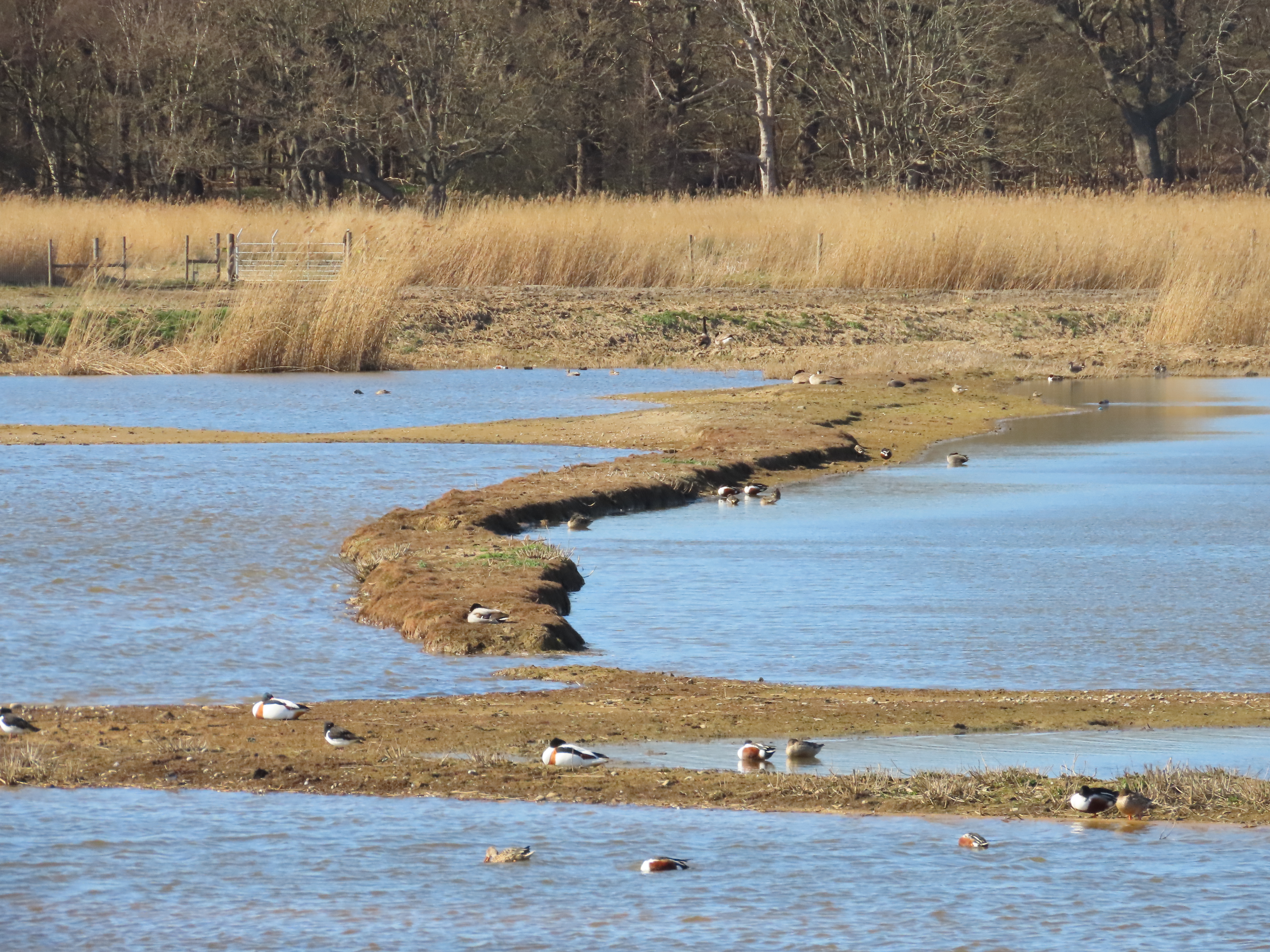
On Benacre Broad a nice colony of AVOCETS was forming. Around 35 birds were present when not disturbed. Several RINGED PLOVERS were present, with a pair on territory on the beach by the broad. Two SANDERLING were  also on the beach, while the usual estuarine WADERS were present, although they were far away, and a heat shimmer was on the broad causing poor visibility. Because of seeing it at distance and in poor visibility, I thought but couldn't determine if I saw a curlew sand, it would have been bit early in the year for one, they are most common around mid May. Around seventy TEAL were also present. Two female MARSH HARRIERS were fighting over territorial rights in the reeds behind the broad, its that time of year, the best, most exciting time of year for birds.


Dead trees Benacre Broad 

The walk north from Benacre involved jumping over the tidal inlet which connects the broad to the sea, fairly narrow, but try jumping with a heavy telescope on your shoulders! The broad is surrounded by dead trees, before changing to arable land on the cliff tops where I was hoping to see a wheatear, but nothing showed up, its a bird that has become scarcer in Suffolk in recent years. In fact summer migrants were totally lacking around the reserve. Its still a bit early but I was hoping for something to have turned up today.


HOODED CROW, Beach Farm, Benacre

The first sign of civilisation was Beach Farm, a nice thatched house and barn, a hodgepodge of different architectural styles formed over the years. It was in an arable field next to the buildings that checking an odd crow I discovered something a lot rarer. My gods, a  HOODED CROW was present. This is a northern version of our black carrion crows, the divide between the species runs along the Great Glenn of Scotland. Its the size and shape of our crows, except for a grey back and chest. Its a very rare bird in Suffolk, less than annual, so was a great find. It stayed for ten minutes before flying north east towards the gravel pits. Ok so some people who look at the bird in the photo may think it looks like a hybrid with a carrion crow. So I put it about on social media, and roughly two thirds of people were sure the bird was a pure bred. Unless I get a blood sample there is no way to be one hundred per cent sure, but I'm counting it as a hoodie. One of the joys of  bird watching, no one can deny me this one.


Not sure what this is, it had pipes protruding from it, bits of string tying it altogether, so it had some kind of use

So the walk back to Covehithe, was a long trek, inland through arable land. This area was a mixture of crops with tightly cut hedgerows, a not very hospitable landscape for wildlife. However there were a lot of tree belts, old woodland divided by agricultural land. In the UK habitats stop abruptly woodland stops and arable begins, with nothing between, creating a totally artificial look to the landscape. In a natural environment habitats grade gradually almost unnoticeably so. Not much was seen in this part of the walk, the usual farmland birds, but I was serenated by the constant sound of SKYLARKS ascending.


So a fairly quiet, if enjoyable day at Benacre. Although its a good reserve, there's often not a lot present here. Suffolk has such a remarkable coast, with such good bird reserves, places can get overlooked. There's a lot of walking between things at Benacre, and although its nice countryside it can be a bit tedious at times. The most enjoyable part of the walk is finding what has fallen off the eroded cliffs onto the beach, things waiting to be washed into the sea. But with the HOODED CROW it just shows any bird can turn up anywhere, so search those crows, those larks, those finches, because there may be a rare bird hiding in plain sight.

Tuesday, 5 April 2022

Minsmere - 2/4/2022


SNIPE in reeds in front of Island Mere Hide


With only a short time to spend at Minsmere today, I chose a leisurely stroll round Island Mere and its reedbeds, rather than a mad dash around the Scrape. And with a beautifully sunny day appearing out of the snows we previously had, it was a very nice experience. Being early April, this part of the reserve was brimming with the rising life of Spring, with so much bird action happening round here.


Island Mere

Island Mere is a large lake in the extensive reedbeds of Minsmere. Great views can be had from the top of Whin Hill above, but the birds are best seen from the hide which overlooks the Mere. Reedbeds are a habitat, like heathlands, where although bird numbers might be smaller, large growths of them support species of birds found in no other habitat. And Island Mere is probably the best place in the country to see those species, rare lurkers that they are.


View from Bittern Hide overlooking the extensive reedbeds

Further down from Island Mere is the Bittern Hide, a viewbox built up in the trees that looks over the extensive reeds. Its well made and even in the strongest winds doesn't sway or even creak. Unlike Island Mere the small pool in front doesn't attract many birds, but you can see some of the reedbed specialists, usually flying about.


MUTE SWAN

The variety of birds were good today on the Mere, although the number of birds were low. Star birds were the pair of long staying SMEW, which had been here since February, although they weren't very active, being asleep in the glare of the sun. The males are stunning, a monochrome black and white, with the females sporting a red head. What is strange about the smews is that they are birds of midwinter, bitterly cold days in January, yet the birds today have stayed on through a warm winter, into a warm spring, totally against their nature. This is my first April record for this species, the latest I have ever seen them stay on, and its got me wondering, what is nature making of this off kilter weather.


Reedbeds

Two WHOOPER SWANS were also present, also midwinter birds staying on for some reason, its been a good winter for a bird at Minsmere that used to be rare here. Two pairs of GREAT CRESTED GREBE were around, and will probably nest here, as well as several COOT battling over territories, and small numbers of TUFTED DUCK, which you would expect at this time of year.


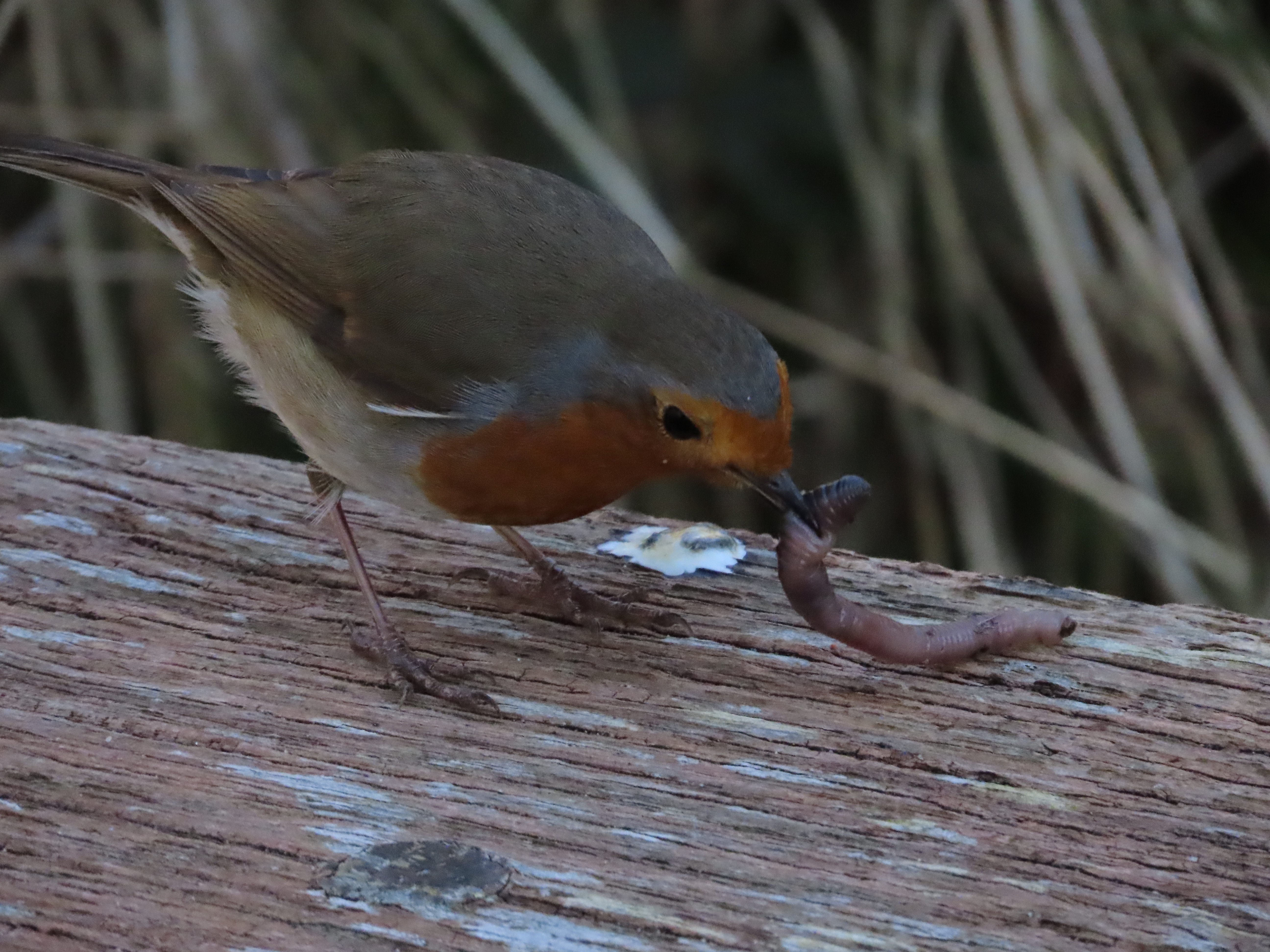
A tame ROBIN by Bittern Hide

In the cut reeds in front of the hide two SNIPE were present, initially hiding in among the reeds, before coming out into the open and close to the hide, providing great views of a difficult to see bird. In the surrounding reedbeds MARSH HARRIERS were busy, with many birds on the wing, male and female, birds battling over territories, for nesting rights in among the reed fronds. One male bird corkscrewed down into the reeds, to its mate, an action known as sky dancing, something all harriers are famous for.


A nice steam punk statue near Canopy Hide. an unexpected find in the woods

Excitement was added by a pair of BITTERNS on the wing near the hide, flying in the air for an extended time, before one flew across behind the Mere. Its always difficult to see this bird as it usually lurks at the bottom of the reeds and its only when they rarely fly that you see them. Another bird was also seen on the wing from Bittern Hide, but only briefly. It was good to see them today as the birds tend to hold tight when establishing territories at this time of year. Today a few birds were heard booming, that fog horn call of the bittern, the unique sound this brown heron of the reeds releases, which is  the loudest sound emitted by any bird in the UK, a sound which carries right over the reserve.


BLACK REDSTART by the Café

So having enjoyed the reeds and the birds which lurk there, it was a stop off at the café for a well earned coffee to end the day. As luck would have it, by the Sand Martin bank just over the shoulder from the café, a BLACK REDSTART was lurking, first just a head appearing, before it flew up and perched on a fence showing itself off to the birders watching. Despite its name, its more of a charcoal grey bird, with a red tail which is noticeable in flight. Its a very rare breeding bird in the UK, usually in urban settings, with a couple of pairs down south at Sizewell power station, but its a common bird on the continent., seen in most villages A scarce migrant at this time of year it was a good bird to end the day on.


Grizzled tree deep in the woods

Well what can you say about Minsmere? It just offers so much for the nature lover, the sheer amount of wildlife that lives here is mind boggling. Such a large juxtaposition of vast, rare habitats attracts nature in great numbers, common and rare. And visiting it is such a treat, its always exciting to dream of what  I'm going to see on my next visit, something which gets me through the hard times. Just one of the many things that reserves like Minsmere offer is that ability to leave the world behind, for me to immerse myself in nature, to get away from the modern day world.

Thursday, 31 March 2022

Hollesley and Sutton Common - 24/3/2022


A COMMON LIZARD enjoying the sun

Whilst birdwatching the wetland area of our countryside leads to instant gratification when it comes to finding birds, its often good to go off track, to look for the birds that inhabit the heaths and woodlands that grow in Suffolk. The birds that inhabit these lands are necessary smaller, and harder to see as they spend a lot of time in cover, and are more widespread, and not looked over by hides. Therefore there is less to see, but often those you do see are good birds, especially those that inhabit Suffolk's heaths. It means going off the beaten track, to explore new areas, to discover an area of the map that's not set up as a nature reserve.


Pine trees on the heath

Heathlands can be difficult to watch as bird densities are low in the scattered heather, when compared to our woodlands, but those that you do see are unique to this habitat. Lowland heath is a globally rare habitat centred on the UK, and Suffolk holds a large proportion of that, and therefore is a refuge for many rare and strange birds.


The pods in this pig farm look like something from a sci-fi film

The heaths at Hollesley and Sutton are huge in extent, they extend for miles, and consist of areas of heath, acid grassland, scattered pine and birch trees, gradually merging into the pine plantations of Rendlesham. I spent a very lovely March day wandering round a large chunk of it. Mid March has the bonus in that the resident birds have started singing, and are easier to see with the lack of leaves on the trees.


The blasted heath, low grass, heather and scattered pine trees

With the large extent of pine trees here COAL TITS were the most numerous bird, but it was to the heathland specialists that I paid the most attention to. On the heaths DARTFORD  WARBLERS were in song, and despite their name, weren't very musical, eliciting a weak scratchy tune. They are moderately recent colonists, having turned up in Suffolk at the turn of the millennium. They are a dark bird, blue-grey on top with a burgundy red underneath, small, with long tails, which are noticeable in flight.


A PEACOCK BUTTERFLY, with the warm weather we have enjoyed in March, many butterflies are out on the wing

The reason I came to the heaths was to search for WOODLARKS and especially to hear their song. Woodlark songs are like that of the skylark, their sister species, but is not as complex. It is a rare sound to hear indeed, from a bird that is rare in the country, Suffolk being a stronghold. Unfortunately, for some reason I heard no birds in song, and only encountered one bird, which perched on a tree branch for me to admire. They look pretty much like a skylark, but have a more distinct eye stripe and a black mark on the shoulder of the wing. 


Also Surprising, only a couple of YELLOWHAMMERS were about, usually a common bird of the heaths. Another good bird was a WOODCOCK, typically seen only when I accidently flushed it. Later on when walking through some pine trees I came upon a huge flock of SISKINS, the combined sound of their sighing calls radiating through the wood, although being in the pine trees, I rarely saw any. A bit further on I found a TREECREEPER in a tit flock, a bird I haven't seen a lot of recently.


A FALLOW DEER, a herd of fifteen were on the heath

With the emergence of  Spring a lot of other wildlife was out and about enjoying the warmest days of the year so far. A COMMON LIZARD was a nice find, seen by the MOD compound. I was alerted to a rustle in the bracken and came across the animal, it seemed to be caught, so I let it go free, running off into cover. The heaths are a good spot for a large herd of FALLOW DEER which can be encountered quite often. They seem ok with people as long as no one gets too close. A herd of fifteen animals were seen today, including a male with antlers, who gently moved off through the bracken when I came too close to them.


The Suffolk Coast has so many natural splendours that it almost an embarrassment of riches when it comes to wildlife. What the most difficult decision for a birdwatcher like myself is, is where to go, because there are so many places available to explore. Although the wetlands on the coast are justifiably the most famous places, areas like these heaths, off the beaten track somewhat, can also hold birding goodies found nowhere else. And it shows that these places can exist next to our food producing farmlands, they don't have to compete with each other. It is easy to allow nature to thrive in our countryside, all we have to do is just let it back in.

Saturday, 26 March 2022

Minsmere - 17/3/2022

Male SHOVELLER, just look at that glorious beak


With the dawn of spring this year we have had some glorious weather to delight in. OK, so some of the resident birds had already started to sing from early February, and a few flowers have begun to bloom from January, but its in mid March that Spring finally arrives, and it does so with a bang, to fully leave winter well behind. And where better to see this explosion of new life than at Minsmere, surely the greatest nature reserve in the country. All around the reserve, birds were filled with the joy of a new season, celebrating the end of the long hard slog of winter.


Birds on West Scrape


The centre of the reserve has to be the Scrape. Like its name suggests, it is really an area of shallow water "scraped" out of the earth. Located just behind the Dunes, it fluctuates from brackish to freshwater, saltmarsh to reedbeds, littered with lots of stony islands that attracts birds to nest. This habitat was first created at Minsmere, and now, every coastal wetland reserve in the world has a Scrape. A simple habitat that is so attractive to birds.


Pair of BLACK HEADED GULLS on East Scrape

This habitat is so, so attractive to birds, way beyond any other and bird for bird is one of the richest places on the reserve. It is also a great place to see birds, as there is no cover for them to hide in, and Minsmere's Scrape is overlooked by four hides. Probably the bird which nests in the largest number here are the BLACK HEADED GULLS, with several thousand crammed into the islands of the Scrape. Today there had been a large influx since I last visited in February, found especially on East and South Scrape. These birds are very boisterous, always noisy birds, and the sound they make creates a visceral atmosphere, the sound of thousands of birds. As you approach the hides to look over the Scrape, you can really hear these birds, adding to that sense of expectancy, as you ponder what you will see. Strangley, though, only one MED GULL had turned up, a bird that although rarer than the similar black heads, still nests here in largish numbers.


East Scrape

Another group of birds for which the Scrape offers a nice secure home are the WADERS, in particular the AVOCET. Minsmere is famous for this bird, being the starting point for the once extinct bird to recolonise the country. Although a small group had overwintered this winter, there has recently been a large influx, and now over a hundred were present. Numbers always fluctuate year on year so its too early to tell how successful they will be. Pairs of REDSHANK were also newly present on the Scrape and on the Levels, whilst LAPWING constantly tumbled through the air in defence of their territory in the area of grass in front of North Hide. And of course you can't ignore the OYSTERCATCHERS, those black and white, and very noisy squabbling birds, several pairs were making themselves very noticeable. Away from the breeding birds, WADER migration hadn't really started, just the usual birds that I had seen over the winter, DUNLIN, TURNSTONE, SNIPE and CURLEW. The exception was a GREEN SANDPIPER on West Scrape, which must be a migrant.


WIGEON on South Scrape

With the changing of the season, DUCK numbers were much diminished, and there had been a significant reduction in WIGEON and TEAL. A pair of PINTAIL still hung on in South Scrape and a pair of BARNACLE GEESE had turned up. The exception to this exodus was a large influx of SHELDUCK, I guess migrants as these birds only nest at Minsmere in small numbers. There were still plenty of SHOVELLER and GADWALL present, birds which nest at Minsmere in good numbers.


GLOSSY IBIS on the Konik Fields

An unusual sighting today was that of a GLOSSY IBIS feeding in the Konik Fields. These fields are a mix of pools, grassland and reeds, where the reserve's ponies are left to graze in the summer. The bird itself was feeding in the water, oblivious to all the people walking passed. The bird has a primeval look, reminding me of something like a dinosaur, which scientists believe birds descended from. This is my first record for the reserve proper, I saw another bird at Eastbridge, just outside of the reserve's boundary.


Male STONECHAT on the Dunes

Although at Minsmere the larger water birds tend to dominate the birdwatching scene, there was a decent run out of the smaller birds today. Star bird had to go to the FIRECREST which was seen in the Sluice Bushes. Unusually the bird was quite showy, and was easily seen if a little furtive, constantly on the move, and difficult to photograph. As its name suggests it has a fiery mohican and distinct eye stripe. Always a good bird, its usually hard to see, and as a result is actually commoner than you expect. Also along the Dunes, two pairs of STONECHAT had turned up, always such showy birds, they like to flaunt themselves from the top of any branch sticking out into the sky. These birds are probably going to attempt to breed this year in the flowering gorse bushes that cover the Dunes.


Female REED BUNTING

Although birds dominate the show  at Minsmere, other types of wildlife can be found here. By the Sand martin Bank, a group of people had assembled, and intrigued, I went over to have a look. It turned out they were looking at an ADDER, which had slithered itself into a growth of bracken. Only part of its body was seen, it was identified by the distinct diamond shape that snakes its way down the back of its brown body. It still always amazes me that snakes live in the UK, especially venomous ones, as if to give two fingers up to our over industrialised countryside. Also about, three RED DEER were seen grazing the Levels. 


East Scrape, looking towards North Hide

Spring is always my favourite time of year. Birds are on the move, while other birds are in song, creating an exciting and unpredictable time for birdwatching. And everything is done at such a frantic pace as all the birds are aware of their time limits. With somewhere like Minsmere, such a fertile place for birds, spring was rampant, so full on, which creates a good day's birding. Minsmere is such a glorious place to visit, and if you've never visited, what are you doing - go now!


Saturday, 19 March 2022

Winter on the Local Patch - 2021/22


A small colony of HOUSE SPARROWS lives around the houses on Old Norwich Road


What a dull dreary winter it has been on the Patch, literally in this case as December 2021 was declared the dreariest month in history. Things were pretty quiet bird wise and a walk around the Patch yielded little beyond the usual cast of resident birds. Things weren't helped  by the mild weather, with the occasional frosts the only sign we were living through the coldest months of the year.


                                                                Trees around Rise Hall


January was the driest on record and the stream, usually a raging torrent at this time of year was reduced to a trickle. Birds you associate with winter, such as the WINTER THRUSHES were low on the ground and there was little sign of any cold winter movements. Leaves hung on to the trees and didn't really fall until well into November. With such inconsistences in our seasons it is still too early to predict what impact this will have on our nature, but no doubt it would struggle.


                                                                        Singing ROBIN


Every year on the first day of the year, I brave the hangover to go out to do my first birding of the year on the Patch. And despite the fact that The Patch isn't very good for birds, its featureless agricultural land after all, it has a special place for me. It is my entrance into nature, a place on my doorstep, where I can leave the human world for a while. I was not the only one out on the Patch at this time as one farmer was ploughing a field on the first day of the year.


                                                        Farmer out on the field on New Years Day


Intresting sightings
Despite all the dreary weather there were still a few decent sightings of birds to be seen. The Patch isn't really great for attracting anything interesting, but every so often something unusual drifts through. The highlight was a RED KITE on 1/3/22, flying high over the Suffolk Punch Field before drifting east over Rise Hall. Red Kites have a very distinct shape, having a forked tail, and its bent wings distinguish it from the local BUZZARDS. This is a bird that although now common across the country is still scarce in this part of the country, this is only my second record for the Patch. However this is a bird that is on the rise, and will probably become as common here as the local buzzards.


                                                                Coppice stalls in Rede Wood


Another good sighting was a WOODCOCK at Rede Wood on 16/1. This is an unusual wader in that it prefers woodland to wetlands, and although not rare, the only time you see one is when you disturb one from cover. They are surprisingly large, almost the size of a partridge, but have a distinct shape. This is my third record for the area and the first for Rede Wood, the other two coming from the Suffolk Punch Field.


                                                        The Stream is running low this winter


Winter Movements
Winter is usually characterised by the movement of birds forced on by heavy weather. However when winters are so mild few birds are made to move involuntarily. Also with the mild weather less birds are forced into this country from the colder continent, and so linger closer to their breeding grounds. THRUSHES were few on the ground with just the odd single REDWING, with the only flock being one of only eleven on 1/1. The main exception was a flock of 60 FIELDFARE in the arable field that runs along Yellowhammer Hedge on 28/1, which was the only time there was any decent flock in the area.


                                                                          GREAT TIT


SKYLARK flocks were exceptionally small this winter only peaking at fourteen on 4/2/22 from Yellowhammer Field. This is another winter, again, where no YELLOWHAMMERS have spent their time on the Patch. Seven or eight years ago there were flocks of at least fifty. I hope they have just wintered elsewhere, rather than indicating a crash in numbers.


From Lark Hill a flock of 300 LAPWING flying over fields in the distance on 27/12/21 was exceptional as these birds, or most waders in particular, are rare on the Patch as there are no areas of wetlands there. WOOD PIGEONS are always on the move and flocks of several hundred birds can be seen feeding on the fields, loudly flapping their combined wings in flight when they are disturbed into the air.


                                                                    Under the pylons


Signs of Spring
With the mild weather, signs of Spring have begun to appear deep in what is traditionally seen as winter. Bird wise the most obvious signs of Spring are when our resident birds start singing. The first species to make some noise was a GREAT SPOTTED WOODPECKER drumming from the tall trees around Suffolk Punch Field at the end of December.


                                                                                BLUE TIT


On 13/1/22 a SONG THRUSH was singing along Fisk's Lane, the path which connects Whitton to Anglia Retail Park, with another singing from the coppice in Rede Wood on 16/1. As its name suggests, this bird is one of our greatest songsters, often belting out its unpredictable tune from a deep thicket. A declining bird it is still common enough, and are mainly found within a dense patch of scrub.


                                                                    The Suffolk Punch Field


On 11/2 the first SKYLARKS began to sing, the birds rising high over the arable fields with their intricate and varied song. The arable fields on the Patch still hold a strong population of this bird. Also on the same date in the  Suffolk Punch Field the lonely BUZZARD which spends the whole year around this field on its own, was joined by its mate, to hopefully settle down to breed and raise more young buzzards.


                                                                       SNOWDROP


Another sign of Spring was the emergence of flowers with the first SNOWDROPS appearing in the wooded areas in January, followed by yellow WINTER ACONITE by Rise Hall and DOGS MERCURY in Rede Wood in February. The emergence of BLACKTHORN, our first flowering shrub, is always an indicator of the upcoming Spring. This year the first appearance of the delicate white flowers happened very early, in the end of February, they usually appear in the second week of March. DAFFODILS too began to appear in late February, growing particularly strongly in the graveyard surrounding the church.


                                                                          DAFFODIL


Also on the 26/2 the first BUTTERFLY of the Spring was seen when a SMALL TORTOISESHELL was in flight along Fisk's Lane. Come mid March it would be joined by other species when the year warms up.


                                       There is a flock of FERAL PIGEON along Old Norwich Road


Even the most unlikely of places can still abound in nature. In no other place do I know the changing of the seasons and the wildlife, as well as I do on the Patch. A place as unpromising as an area of agricultural and equestrian fields with their attendant hedgerows doesn't look too good on the surface. But our countryside, no matter how unfriendly to nature, is still a wild place and here the wildlife can still cling on, if only by their finger tips.