Wednesday, 28 September 2022

Cavenham Heath & Lackford Lakes - 22/9/2022

GREAT TIT

Although the best reserves in Suffolk are found mainly on the coast, there are a few good birding places further west, inland. Cavenham Heath and Lackford Lakes lie on the edge of the Brecks, an area of multiple habitats that was originally heathland. The area is a good place see those scarce birds of heathlands, the best place in the country for finding stone curlews.

Cavenham Heath 

Cavenham Heath is one of the few remnants of Brecks heath existing, an area of acid grassland with scattered growths of heather. Managed by Natural England (the government conservation body), the place is off the beaten track, a little area of wilderness in the Suffolk countryside, found at the end of a series of quiet roads.


Cavenham Heath an area of acid grassland with scattered heather and birch trees

The heath is famous for STONE CURLEWS, both as a breeding site and as a place where they congregate before departing for migration. It was for the latter reason, the birds depart in October, that I decided to have a visit. Looking for stone curlews is tough, they hate people and keep well away. They are also very well camouflaged and can disappear into  any tussock of grass, the birds tend to run along the ground rather than fly. Cavenham is vast, and finding any stone curlews is hard. Walking along the road which cuts through the centre, I scanned the sheep grazed grass for a WAILING HEATH CHICKEN, and I was eventually successful. Down by the very edge of the reserve, by the river Lark, I had a brief view of one, before it disappeared. The birds are a tan colour with a big yellow eye and a straight, yellow beak, distinctive looking without being particularly attractive. It appeared briefly before disappearing into the tussocky grass of the heath.


Near to the stone curlew, a GREY PARTRIDGE, stretched its neck above the grasslands to watch me. Formerly a very common bird of the countryside, they are now rare and hard to find, mainly due to habitat loss. Being a heath, STONECHATS were common, with plenty of birds perched on a fence or gorse. A GREY WAGTAIL was down by the river. A BROWN HARE was also about, grazing among the smaller rabbits. However, being a heath in September, in general it was fairly quiet.

Lackford Lakes

It was a quiet day down at Lackford, as it usually is at this time of year. The lakes were quiet, some wildfowl about, but no big counts. Despite there being plenty of habitat the reserve is poor for waders, and despite there being plenty of mud, nothing of this type of bird was seen. With the recent drought, parts of the Slough had dried up, but as a whole most of the lakes held water.


GREAT TIT on the Stump

As usual at Lackford, there were plenty of DUCKS about. Most common were TUFTED DUCK with close to a hundred present. There were also plenty of GADWALL and TEAL about with around fifty of each around, with single figures of SHOVELLER and POCHARD. The Slough held the largest number, the birds congregating around the central part of the lake. 


The Slough

A HOBBY flew over the trees behind the Slough an acrobatic display of the freedom to be a bird. Small birds were hard to come by, a few CETTI'S WARBLERS had started singing, god knows why in September, belting their song out from an overgrown area. Down by the Stump, a few TITS and DUNNOCKS were about, but nothing much else of note really.


A DUNNOCK and GREAT TIT

In all a quiet visit to west Suffolk, but I came away with the bonus of finding a stone curlew, the must see bird of the day. Its been a very uneventful Autumn for me with little passing through, I haven't seen anything really of note in the county. Maybe something will drift in but I don't hold up hope. What is really concerning is the lack of common migrants, with no swallows or hirundines seen today, despite it being peak migration. Bird numbers are crashing, as is most of nature, an apocalypse we can ignore, but shouldn't.

Saturday, 17 September 2022

Dingle Marshes - 15/9/2022

Fishing boat at Dunwich

Its been a fairly underwhelming Autumn so far on the Suffolk coast with little of interest moving through. So with not much about I chose to visit Dingle Marshes on the off chance that I might find something of interest. Alas it wasn't to be, as although there were a few interesting birds about there was just nothing truly rare to see.


LITTLE EGRET on one of the shore pools

The walk around Dingle Marshes starts at Dunwich car park, walking north along the shingle beach, moving inland at the reed beds of Westwood Marshes before heading back south through Dunwich Forest. The Marshes are a mixture of grassland and reeds with a couple of shore pools, and the huge reed bed of Westwood Marshes, which is part of the Walberswick reserve. I spent some time around the area, three hours, giving it a thorough going over, checking all the available habitat so nothing could escape my searching gaze.


The huge skies that dwarf the marshes here

The shore pools on the marshes are pretty good for WADERS which are attracted to the shallow brackish water. The highlight today was a flock of five SPOTTED REDSHANK, a fairly common wader at this time of year, but for some reason they have been rare on the Suffolk Coast this Autumn. Its similar to a common redshank, but is more elegant, with a light grey wash plumage, and black on its bill. A WHIMBREL was present, as were two AVOCET, six DUNLIN, seven GODWITS and a COMMON SANDPIPER. Numbers of Teal had built up with 130 present, mainly asleep on the edges of the pools. Also around was a GREAT WHITE EGRET, mixed in with the LITTLE EGRETS, Dingle Marshes is the best place on the Coast to see this increasing species. A flock of seven RINGED PLOVERS were on the beach, often flying up and down when scared by a passing dog walker.


The abandoned mill at Westwood Marshes

Walking through the reeds at Westwood Marshes, a KINGFISHER flew down one of the dykes, a bolt of sapphire shooting across the water, moving so quickly before disappearing for good. The reeds were full of BEARDED TITS, their metallic "pinging" call echoing among the tall stems, with the odd bird rising up to be seen. This is the time of year when they "erupt", when flocks of the birds emerge from the reeds, leaving the larger reed beds where they nest to winter elsewhere. WATER RAILS could be heard calling, a squealing pig sound coming from the reeds, this is a fairly common bird that is so hard to see, hidden in the reeds, but announces itself every so often. Several WHEATEAR were around the shingle bank, while a STONECHAT was seen in the grassy slope that rises from the marshes.


MUTE SWAN on a dyke in the marshes

In the end it was a fairly standard day's birding down at Dingle Marshes with nothing much particularly of interest. I was hoping something of note might have turned up, but it wasn't to be. Its alright, its nice walking territory, and I enjoy visiting other places that aren't Minsmere. Its probably not the best place to visit on the Suffolk Coast, but worth a look every so often.

Tuesday, 6 September 2022

Minsmere - 1/9/2022

Water measuring stick in the dried mud

With the extreme drought conditions we are facing (there hasn't been any significant rainfall this year) everywhere is drying up and wet places are hard to come by. In the nearly thirty years I have visited Minsmere I have never seen the reserve so dry. East Scrape has completely dried out, and there were only large puddles left on West Scrape. This really bodes ill, as if there is no rainfall soon, places may never recover, our green and pleasant land turned to a desert.


East Scrape is now a desert.

With the Scrape mainly dried out, water birds were hard to come by. Most of the water had been pumped into South Scrape, and the levels were still high there, with some TEAL and SHOVELLER there, and a few lingering AVOCET. WADER wise it was very quiet, six SNIPE and four DUNLIN on West Scrape was paltry numbers. A flock of twelve SANDERLING were disturbed from the beach and flew down the coast.


All the water had been concentrated on South Scrape

A few lingering MARSH HARRIER were around the reedbeds, while a GREAT WHITE EGRET was seen to fly around the reeds before going down again. On Island Mere there were more ducks GADWALL, TEAL, SHOVELLER and TUFTED DUCK, with a few GREAT CRESTED GREBES as well.


A few puddles remained on West Scrape

Near the Konik Fields a flock of five BEARDED TITS erupted from the reedbeds and flew across the path, with another one lingering in the reeds. Only one STONECHAT was in the Dunes, a juvenile, the nesting birds have moved on and migrant birds have yet to arrive. Other wise small birds were keeping very quiet.


The anti-tank blocks facing Sizewell B, on the Dunes

So probably the  quietest day's birdwacthing I have ever experienced at Minsmere, there was just so little about. Water is the source of life and with so little of it about there were so few birds. If it doesn't rain, where does the water come from? A climate emergency is happening now, right in front of our eyes, yet nothing is being done to address it. Things have been started but not enough is being done now. What we need now is a deeper connection with our environment so we can understand just what is going so wrong with our world.

Tuesday, 23 August 2022

Havergate Island - 20/8/2022

The main tidal lagoon, which was full of birds


The only island to exist in Suffolk, Havergate, is a strange concoction of tidal lagoons, shingle stack and saltmarsh. Its an RSPB reserve, originally bought for the then rare AVOCETS that nested there. Today I saw several hundred, they breed and winter in the area in large numbers, but back in the 1940s they were so, so rare, the first breeders for 150 years.


The jetty among saltmarsh

Its a hard place to get to, closed for much of the year, but today the local RSPB group was holding an open day. As I haven't been down for four or five years I decided to have a visit, taking the October Storm from Orford Quay, and arriving on the Island around midday. In the end the visit was only for a couple of hours, we only visited two hides, missed a couple more, didn't really get time to truly take in the site, but it was a good taster session. 


Another snapshot of the tidal lagoon

The Island is an a confluence of the River Ore and the tide was fairly high, with little mud available, but with the amount of human disturbance, whether from speed boats or wind surfers, there weren't many birds about. Many yeas ago I did some voluntary work on the island creating a screen to stop disturbance when visitors walked up to a hide. Within a couple of years the screen was washed away by heavy floods, making the work frustratingly futile.


There were plenty of AVOCETS on the lagoon. When the reserve was first bought in the 1940s, they had started to breed for the first time in 150 years

Birding was good on the tidal lagoons, full of birds disturbed from the busy estuary. Large flocks of DUNLIN, RINGED PLOVER, AVOCET and BLACK TAILED GODWITS were about, whilst the GREY PLOVERS were still looking dapper in their costumes of black belly and silver grey back. Much rarer for the area were a single KNOT and BAR TAILED GODWIT, while a SPOTTED REDSHANK was a good find, as they have been rare on the Suffolk coast this year. 


Belper's Lagoon, a smaller lagoon than the first

There were good numbers of SANDWICH TERNS about, over a hundred on a large island in the tidal lagoon, with some COMMON TERNS feeding on the river. Some DUCKS were about, MALLARDS and TEALS, but not in particularly high numbers. A feature of Havergate Island in recent years has been the establishment of a SPOONBILL colony, the birds started nesting a couple of years ago. Today fifteen were present, a decent total, but they were asleep at the back of the island, next to the giant artificial nests created for them to breed in.


The old living quarters on the island

Today was a brief taster session, a good snap shot of the reserve. The only annoying thing about the place is how difficult it is to visit, trips there are so few, the island is closed to visitors in the summer due to rare breeding birds. Eventually I will get around to getting on one of those rare boat trips to the island, preferably in Winter when the wild winds blow down the estuary and the tidal lagoons fill with birds.

Saturday, 20 August 2022

The Local Patch - Summer 2022

Pair of COLLARED DOVES

With climate meltdown upon us the Patch has groaned under the weight of both drought and high temperatures. The vegetation turned brown, water dried up from the ground and the crops nearly failed. When a green and pleasant land is forced to bear the weight of this hardship, then something must be wrong with the world. I don't think there was any rain in this period, just oppressive heat, which has taken its toll on the area. How much time we have left until things become serious, I'm not sure, all that is evident is that something bad is happening now.


One of the Prairie Fields


The Patch waxes and wanes with the seasons, and this Summer was like others before hand, yet different, birds taking a backseat to wildflowers, butterflies and dragonflies. The land face the problems of urban edge agricultural land facing the usual pressures affecting our countryside and the intense burden we put upon it. Our countryside is too precious and yet we treat it so poorly at times, it is evident its not coping well. It won't be long before we have a meltdown on our hands. But not all is lost, the countryside is very good at recovering if we just give it room to breathe.


The Stream, really a glorified ditch, has dried up to a stagnant puddle


A permanent feature of the Patch are the resident pair of BUZZARDS in the Suffolk Punch Field. Close by were a pair of CROWS. Both are big birds at the top of their food chain, and both sets of birds would tussle in the air whenever the other came close to their breeding area. I don't think the buzzards were successful in breeding this year, as I didn't see any young. This doesn't matter too much as they are long lived birds, so are able to raise many young over their lifetime. Every time I visit they are always there soaring over the fields with their broad round wings, kings and queens of all they survey.


The same view two months away, the top in June, the bottom in August


Bird-wise nothing unusual was seen on the Patch, just the usual breeding birds, those found in the general countryside. One of the important birds of the area are YELLOWHAMMERS, beautiful, chubby yellow birds, with their "little bit of bread and no cheese" song. Large  flocks used to winter here, but none have done for a while, and this Spring there were few. However over the Summer six territories were found, which is only one less than last year, which is fine, not a large drop. This is still a common bird of the countryside, so they can easily recolonise form elsewhere, but I would still like to see them on the Patch.


BLACKBIRD, a bit moth eaten by this time. It will moult again over winter

Entrance to the Suffolk Punch Field

Despite the oppressive weather it seems to have been a good breeding season, and by the start of July TIT flocks were in evidence, with young birds in abundance. A young SONG THRUSH was in River Meadow, young WRENS in several places and on the Reservoir a brood of three ugly MOORHEN chicks were in evidence with their attentive parents. Quite unusual, as there aren't any shooting estates in the area, was a brood of RED LEGGED PARTRIDGES wandering down Old Norwich Road, a bird that waxes and wanes, the first evidence of breeding for me for four or five years.


The Reservoir

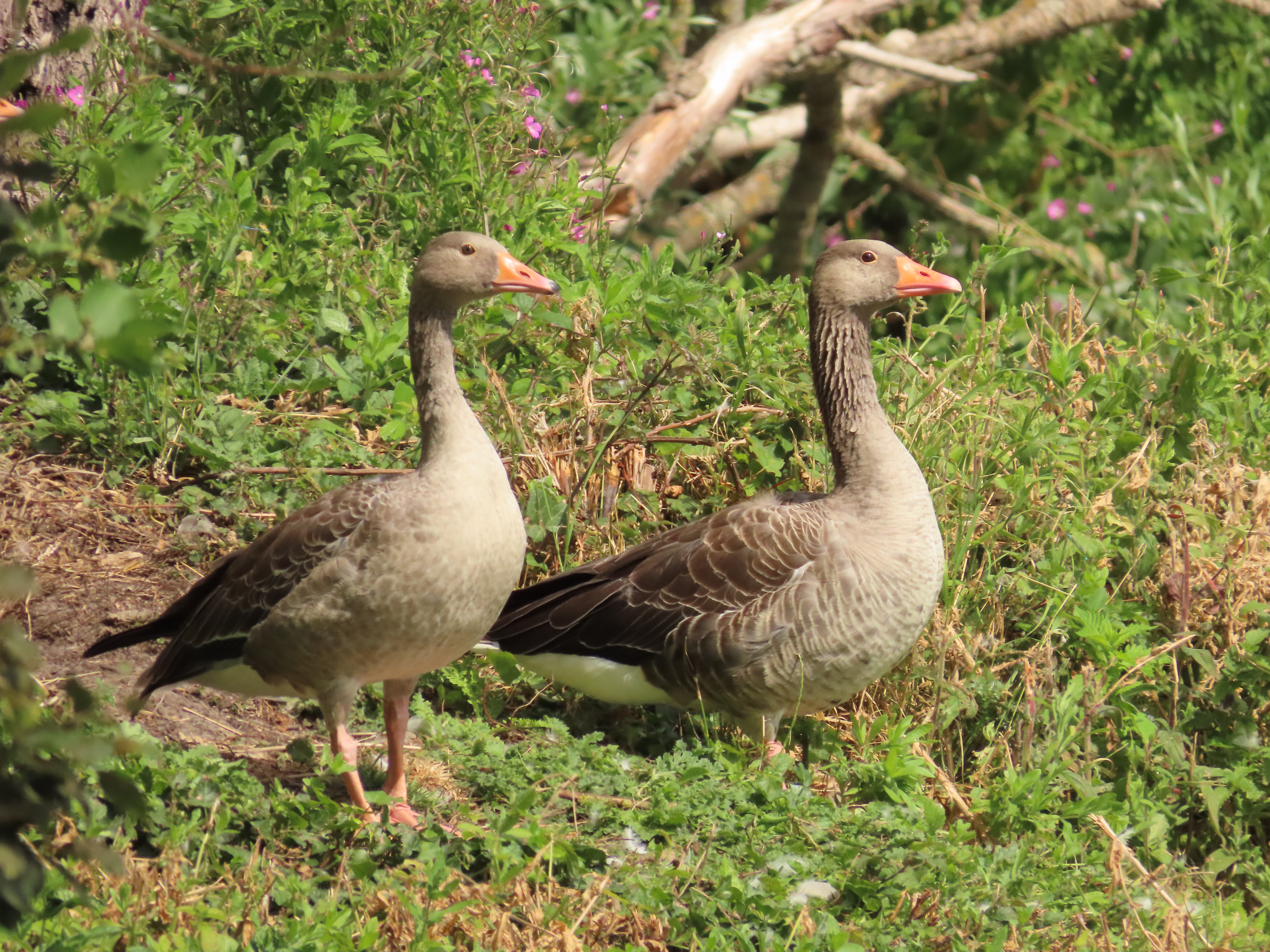
Two of the twenty GREYLAG GEESE that visited the Reservoir in August

A feature of the Patch in bygone years was the flock of resident GREYLAG GEESE with eight or so present by the Pond, but never breeding. These birds disappeared several years ago, but on 9/8 twenty were present on the Reservoir, the first for several years, but a week later had gone. CORMORANTS are quite rare so one on the Reservoir on 13/8 was a nice record, primeval looking birds, they are truly the descendants of dinosaurs.


BROAD BODIED CHASER by the Stream

The Reservoir is a good place to see the SWIFTS and HOUSE MARTINS that nest in the the nearby Rise Hall and farm buildings, hawking high over the water to catch an unwary insect in the air. Its good that they still cling on here as they've become nearly extinct in nearby Ipswich, the skies becoming silent.


PYRAMMID ORCHID in the First Field

The colony has grown to over two thousand flowers

This colony has grown on set-aside and is less than four years old

Over the Summer the flower I  most delight in experiencing is the PYRAMMID ORCHID, with two colonies on the Patch. In the First Field the colony developed on set aside, left fallow four years ago. Since then it has grown from strength to strength with at least two thousand spikes in flower this year, and the colony is spreading into the main field and expanding. The only problem is that usually when a farm field next to buildings is left to go fallow it means the field is going to be built on. To lose such a large colony when our countryside is so lacking in a friendly environment is a sad thing indeed. The other colony is smaller, but has been there since I started visiting the Patch ten years ago, I call it the Orchid Patch, and this year it also had a good crop. Also in the First Field there is a small stand of VIPER'S BUGLOSS, a tall blue flower, with truly a great name, it flowers there every year, ten or so plants sticking above the surrounding grass.


POPPIES growing along Old Norwich Road

Otherwise wildflowers are finding it difficult to find a foothold on the Patch, relegated to the field edge, the area of rough ground that escaped the plough. Its been years since there's been a poppy field, the only flowers are those found on the grass verge of Old Norwich Road. The meadows are full of grasses but not many flowers, poisoned by herbicides sprayed by disinterested keepers of the land.


SONG THRUSH. A few pairs can be found on the Patch, with at least one successful this Summer.

By the end of the period all the crops have been harvested, the meadows mown. The Pond has been excavated, making it deeper, as pretty much the entire year it has been bone dry, due to the drought. The stream, a long drainage ditch, has by this time rune dry to a stagnant puddle. So the only bit of water is the Reservoir, used for irrigation, surrounded by trees, its home to large carp that occasionally break the surface in little ripples.


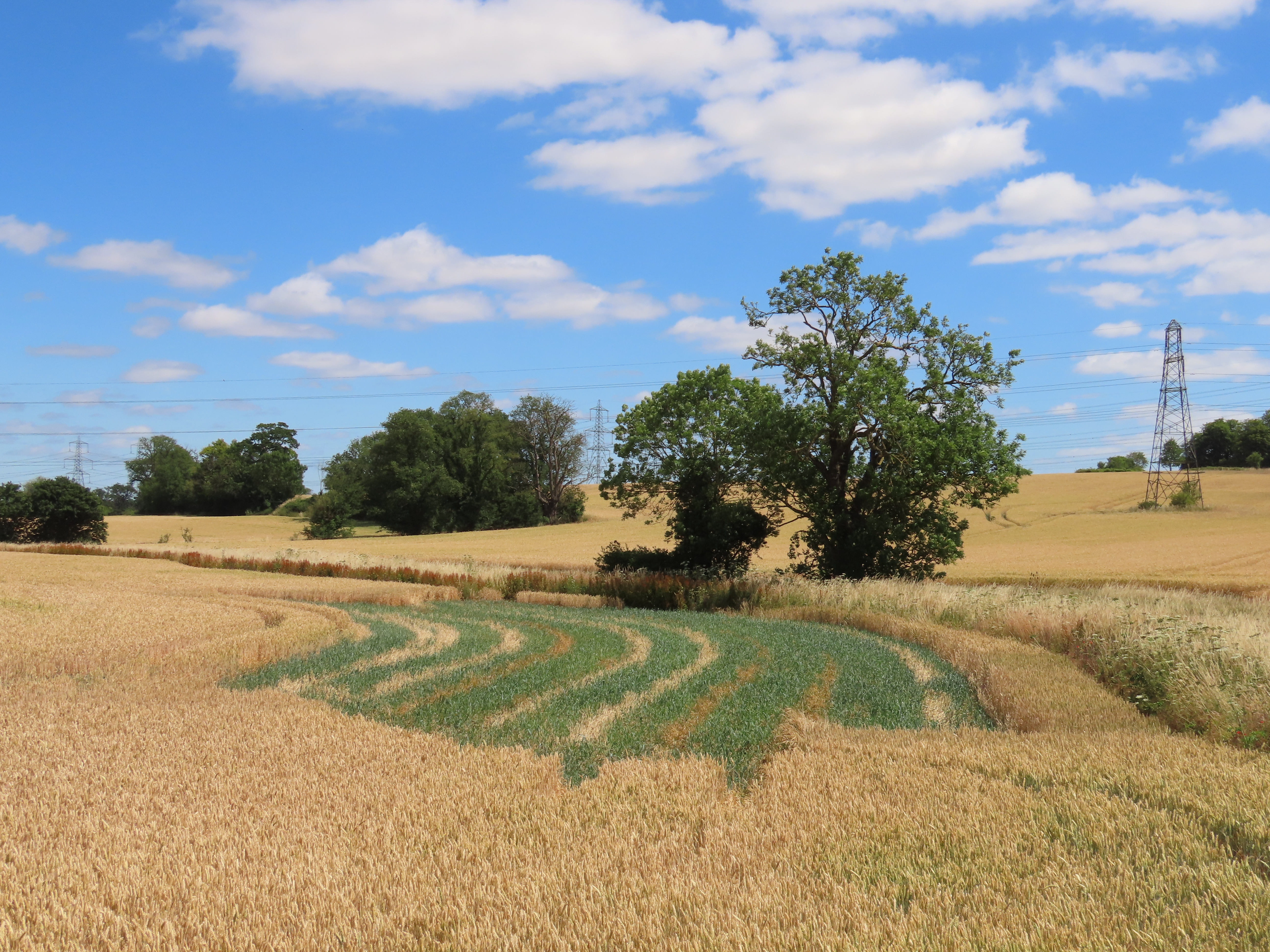
River Meadow, looking towards Suffolk Punch Field and the Sentinel of the Patch

In the end a rather uneventful Summer on the Patch as the days move on and seasons change. Birds have remained fairly constant in the area, populations change, come and go, but there's not too much that gives concern. The appearance of the orchid colony has really added to the Patch, something important to an area not particularly species rich. The Patch is really important to me, and although not much is really seen on the average visit, this is my main access to nature, the world beyond the human, giving me something intangible, something beyond money and profit. And for that the Patch is truly special.

Saturday, 13 August 2022

Alton Water - 11/8/2022

Pair of EGYPTIAN GEESE.

Being the largest body of freshwater in Suffolk, Alton Water can be a magnet for some rare and interesting birds. On the other hand you can get days when you slog round the vast reservoir and see nothing except the odd coot. Today's visit was like the latter, a fairly fruitless attempt to try and pickup a somewhat underwhelming August so far for birds.


The view from the Northern Hides, Part 1: Plenty of mud, but still plenty of water

Being August, and the hottest August in recent history, birdwatching was going to be difficult, a dying landscape, with all the birds sheltering from the intense heat. So with that in mind I decided that areas of water would be the best bet to find birds, and one place where it will still be wet was Alton Water. Despite large areas of mud, especially on the Dog's Tail, there was still large amounts of water left, even if, in the end, not many birds.


A HERON from the Northern Hides

With all the mud about I thought that  maybe some WADERS may be attracted, those birds that feed on muddy margins. However, only two COMMON SANDPIPERS by the Northern Hide, and a GREEN SANDPIPER on the Dog's Tail was about it. Similarly, August can be a good time to see DUCKS, as they become flightless and seek deeper water as they moult their feathers. Again only a handful of TUFTED DUCK and POCHARD were about in a small flock near the causeway. For some reason Alton Water is pretty poor for ducks, I never see any big flocks of anything there, which you would think is surprising for such a large body of water.


View from the Larchwood Hides (the southern ones)

On the various rafts on the water, Alton is the site of Suffolk's second COMMON TERN colony, but although successful, the whole colony upped and left last week, for no reason. This was according to a local birder, and as a result of this only a couple of birds were about. Other hawkers of the air were over the water, as small numbers of SWALLOWS and SAND and HOUSE MARTINS passed through, dipping and corkscrewing through the air in pursuit of some flying lunch.


Birding at Alton Water means bored looks through hundreds of geese

As you would expect, large numbers of GEESE were about, with around a hundred EGYPTIAN GEESE here, I wonder where they all come from, as I have never see any nest here, never any goslings. These birds are bucking the trend and increasing in plague proportions, there are now so many about, on most bodies of water.


A FOX on the Dog's Tail, old and dishevelled he was of no threat to the nearby wildfowl

Out on the mud of the Dog's Tail, a FOX slinked around, old and dishevelled, he was of no interest to the nearby resting ducks who nonchanontly watched him saunter past. Nearby a SLOW WORM, slithered passed, in the thick undergrowth. Although they look like snakes, they are really legless lizards, and they are hard to see, as with all animals in a human controlled world they are used to disappearing quickly.


View from the Northern Hides part 2: One of the tern rafts, in June this is a thriving colony, but had now been abandoned

A fairly underwhelming show from the big blue. It can be hard work watching Alton Water, as there are so few observation points on such a large place, which means anything can escape observation. However its still a decent place to go bird watching, I've seen interesting birds here (gull-billed tern for one), and I'm still going to keep visiting, because under the shade of the trees, with the water lapping on the reservoir edge, its still a great place to spend some time.

Thursday, 11 August 2022

Minsmere - 4/8/2022

Where's all the water gone? A LITTLE EGRET stands on some dry mud on the Scrape

I don't really like birdwatching in August, its just too hot and uncomfortable, the birds are keeping their heads down, and migration is only slowly getting going. The main thing of birdwatching at this period is the WADER migration that is gearing up, and where better in Suffolk to find them than Minsmere. However  this reserve, like everywhere else in the country has suffered from the heavy drought that is occurring at this time, and the Scrape, the centrepiece of the reserve, was turning into a puddle.


A WASP SPIDER, a vibrantly coloured arachnid perched on his spider web in the Dunes

WADER number and variety was decent without being spectacular, and nothing unusual was seen today. During Autumn the water levels on the Scrape recedes and the resulting mud is highly desirous to the type of birds that like to probe the mud for food. But with the drought we are constantly having  the water had pretty much dried up with East Scrape practically empty. At least five RUFF were about across the Scrape, although most had now moulted out of their fantastic summer plumage, and were now just plain brown.


North Hide overlooking not a lot on the Scrape.

Small flocks of DUNLIN were about, RINGED PLOVERS, SNIPE, GREEN and COMMON SANDPIPERS were all standard birds for August. The fading red of a KNOT on South Scrape was nice, a bit unusual for Minsmere. Usually at this time of year a feature of the Scrape is the migrating spotted redshanks, moulting out of their black summer plumage, with double figures usually to be expected, but today there were none, which is unusual.


A STONECHAT, one of this year's crop

COMMON TERNS had all nested, reared young and left, with only a few stragglers left behind. Two LITTLE TERNS were about, an adult feeding a youngster, so breeding has been successful on the Scrape, which is good for a declining species. A moulting adult LITTLE GULL on East Scrape was dwarfed by the accompanying BLACK HEADEDS, this bird is a feature of this time of year, the birds summer here without nesting.


A bit more water on West Scrape

With water levels so low, DUCKS were virtually non-existence, a few TEAL on the Scrape, and not much on Island Mere. Two pairs of GREAT CRESTED GREBE had raised families on Island Mere, a GREAT WHITE EGRET flew over and several late nesting MARSH HARRIERS flew behind over the reeds.


Looking towards Island Mere and the vast sea of reeds, from Whin Hill

The Dunes are always a good spot to see STONECHATS, there's always usually a group of birdwatchers admiring a bird perched on the top of a gorse bush. There were five birds seen today, probably local birds, the heaths of Suffolk are a national stronghold for this beautifully plumaged bird. An unusual bird for Minsmere was a KINGFISHER perched on a tree, seen from Bittern Hide, but annoyingly just in too much cover to be photographed. In all the time I have been watching at Minsmere I have had only single numbers of sightings of this beautiful bird. The SAND MARTIN colony in the old car park has really done well this year, birds were still nesting in the holes in the sandy cliffs, possibly raising a second or third brood while they can. In general though the oppressive heat of August keeps the smaller birds under cover in the sweet, sweet shade.


Some roosting wildfowl on Island Mere

In the end it was a fairly poor showing at Minsmere with nothing of particular interest. Usually after each visit to this uber reserve I usually have a nice year tick, a new bird record for the year, but there was nothing today. Everything is wilting under the intense heat and there has been no prolonged rainfall this year, so the vegetation was bone dry. Nature is really feeling the brunt of this weather, everything is brown, groaning under the weight of the August heat. I pray for rain.